English
An L-shaped jaw is one of the facial structural features that makes many people self-conscious about their appearance, especially when photographed from the side or head-on. Not only does it affect facial aesthetics, but an L-shaped jaw can also affect chewing function and temporomandibular joint (TMJ) function if severe. So, what is an L-shaped jaw, is it dangerous, and what are the effective solutions for improvement? This article from HBIO Clinic will help you understand.
What is an L-shaped jaw?
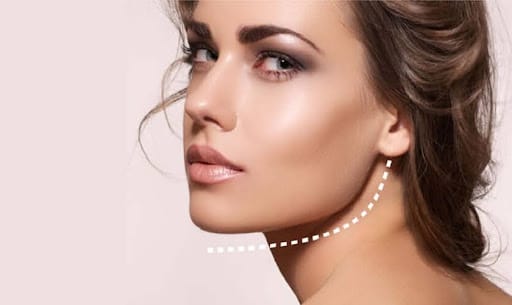
An L-shaped jaw is a term used to describe a condition where the lower jaw, especially the jaw angle, develops in a square, wide, or broken shape, resembling the letter “L” when viewed from the side. This characteristic makes the jawline lack a soft curve, making the face look stiff, rough, and less slender.
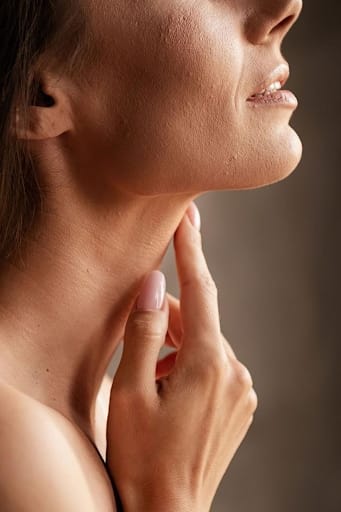
This condition can occur in both men and women. However, in women, an L-shaped jaw often has a more pronounced impact on aesthetics, making the face look more masculine or older than its actual age.
Signs of an L-shaped face
You may have an L-shaped jaw if you experience one or more of the following signs:
- Square jaw angles, clearly visible edges when viewed from the side
- A jagged, uneven lower jawline
- A wide, disproportionately large lower jaw compared to the overall face
- A face lacking a V-line shape, making it difficult to create flattering angles in photos
- May experience jaw fatigue when chewing for extended periods
To accurately determine whether the L-shaped jaw is due to bone or muscle, a thorough examination and facial X-rays are necessary.
Causes of an L-shaped jaw
The L-shaped jaw can stem from various causes, the most common of which are:
- Congenital genetics: This is the most common cause. Jaw structure is largely determined by genetic factors, leading to a large and square jaw angle.
- Overdeveloped jaw muscles: Grinding teeth, chewing hard foods frequently, or clenching the jaw under stress can cause the masseter muscles to develop excessively, revealing an L-shaped jaw.
- Long-term lifestyle habits: Chewing unevenly on one side, incorrect jaw posture, or improper bite also contribute to an unbalanced jaw development.
Current Methods for Improving L-Shaped Jaws
The condition of an L-shaped jaw, which makes the face look square, rigid, and less refined, is increasingly attracting attention. Currently, there are many effective methods to improve it, from minimally invasive to more intensive interventions, suitable for different causes and degrees:
Adjusting Lifestyle Habits
This is a fundamental step, suitable for mild cases of L-shaped jaws or those caused by overdeveloped masseter muscles. Changing bad habits helps limit jaw muscle hypertrophy and supports more effective treatment methods.
Specifically, avoid chewing overly hard foods, don’t chew unevenly on one side, limit teeth grinding while sleeping, and reduce the habit of clenching the jaw in daily life.
Massage and Jaw Muscle Exercises
Facial massages and jaw muscle exercises help relax the masseter muscles and reduce their size over time. This is a suitable option for those who want to improve their face naturally and without invasive procedures.
However, this method requires patience, and the results are gradual, not immediately apparent.

Jawbone Reshaping Surgery
For cases of L-shaped jaws caused by bone structure and pronounced severity, jawbone reshaping surgery is the most thorough method. The surgeon will directly intervene in the bone to create a softer contour and balance facial proportions.
This surgery provides long-lasting and noticeable results, but requires a recovery period and careful evaluation before intervention.
Botox Jawline Slimming Injections
Among current methods, Botox jawline slimming injections are highly regarded for their ability to improve L-shaped jaws without surgery. Botox directly affects the masseter muscle, causing it to relax and shrink over time, thereby reducing the width of the lower jaw, softening the jawline, and making the face look slimmer and more harmonious.

This method is particularly suitable for mild to moderate cases of L-shaped jawline, where a quick, minimally invasive result is desired and no long recovery time is needed. However, to achieve beautiful and safe results, Botox must be injected correctly, in the right dosage and at the right location, at a reputable facility.
Botox Jawline Slimming Injections at HBIO Clinic
If you feel self-conscious about your L-shaped jawline making your face less slender but are not ready for surgery, Botox jawline slimming injections at HBIO Clinic are a safe and effective option to begin your journey to improve your appearance.
Here, each client receives a direct examination and assessment of their facial structure and masseter muscle development by a specialist doctor before Botox injections are prescribed.
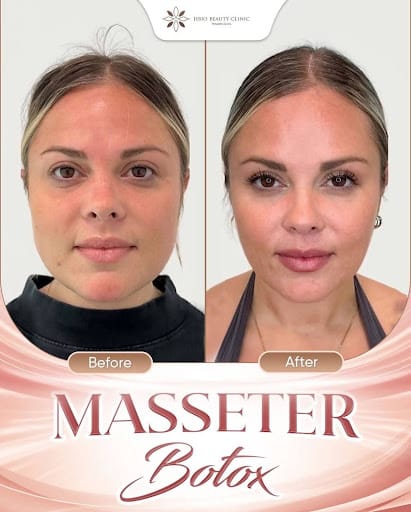
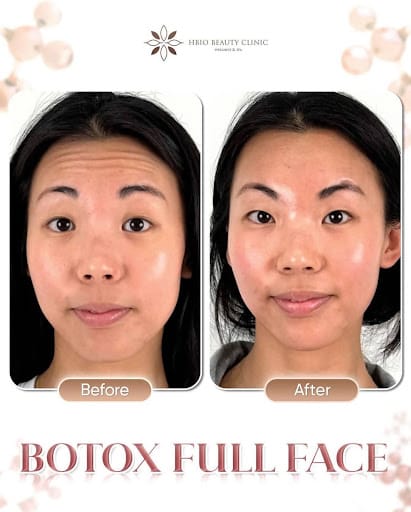
With genuine Botox, a standardized medical procedure, and strict technical control, HBIO Clinic is committed to providing a soft jawline, harmonious facial features, and natural results. Don’t let facial imperfections make you lose confidence; contact HBIO Clinic today for expert advice and to choose the optimal solution for you.
Phone / Zalo: 0947.697.795
Maps: 24 Truong Han Sieu Street, Tran Hung Dao Ward, Hoan Kiem District, Hanoi.