Tiếng Việt
The chin is one of the features that greatly influences the balance and harmony of the face, especially when viewed from a side angle. However, many people experience a receding chin, making the lower jaw appear short, less defined, and resulting in an overall less balanced face. In the article below, HBIO Clinic will help you understand the signs, causes, and methods to improve facial features for a more harmonious appearance.
What is a receding chin?
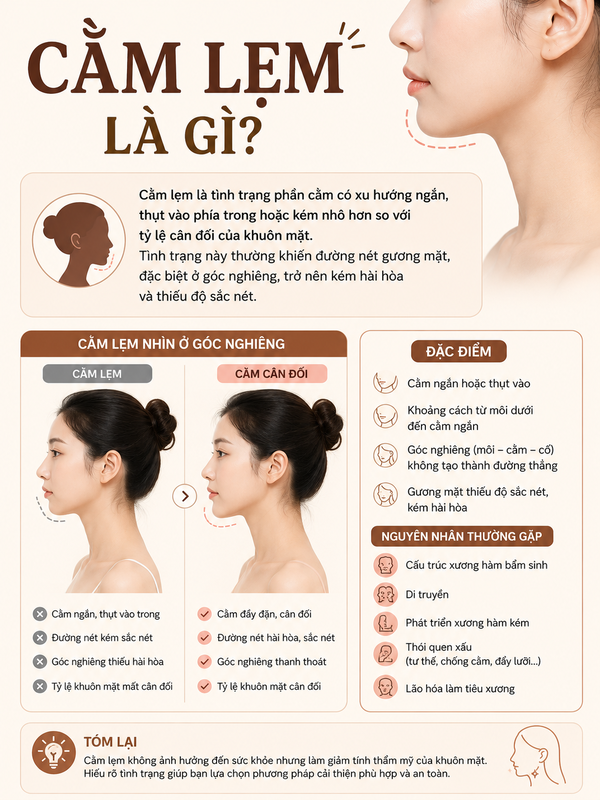
A receding chin is a condition where the chin tends to be shorter, set back, or less prominent than the rest of the face in proportion. This often makes facial features, especially from a side view, appear less harmonious and less defined.
Identifying signs of a receding chin
Specific signs of a receding chin include:
The profile of the face lacks the E-shaped curve
When viewed from a side angle, the chin often appears recessed compared to the forehead and nose, causing the face to lose its balanced E-shaped curve. The line from the lower lip to the chin is not clearly defined, making the overall face look shorter and lacking depth.
The chin is short and lacks projection
People with a receding chin typically have a shorter-than-average chin, resulting in a narrower lower facial length and an overall unbalanced appearance. When viewed from the front, the chin area appears “insufficient” compared to the forehead and nose, making the face look rounder or more rounded.
Furthermore, a lack of chin projection also makes the jawline less defined and the face appear less refined.
The feeling that the neck and chin are connected
Because the chin is recessed, the transition area between the chin and neck is often not clearly defined. When viewed from the side, many people will feel as if the neck and chin are almost joined together, making the lower face look heavier and less defined.
This condition also makes the face appear fuller or less slender, even if the body doesn’t have excessive fat.
What causes a receding chin
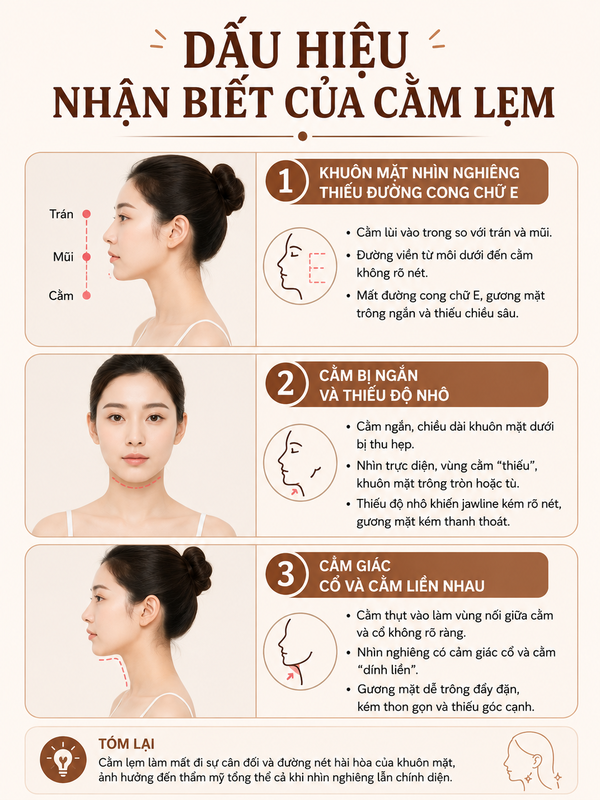
A receding chin can stem from various causes, including habits and external factors:
Due to genetics
Genetics significantly influences the shape of the chin and jawbone structure of each individual. If someone in your family has a short lower jaw, a receding chin, or a recessed chin, the risk of future generations experiencing similar conditions is higher.
These characteristics often appear from a young age and become more pronounced as the face fully develops.
Habits from childhood
Certain habits that persist during jaw and facial bone development can cause the jaw structure to develop incorrectly and lead to a receding chin over time.
- Mouth breathing: Causes jaw and facial bone development to be incorrect, making the lower jaw more likely to recede.
- Frequent chin resting: Creates prolonged pressure on the jaw area, affecting the balanced development of facial bones.
- Thumb sucking or bottle feeding for too long: Easily causes misalignment of teeth and bite, making the chin appear shorter.
- Incorrect tongue thrusting: Creates incorrect force on the teeth and lower jaw, affecting facial structure.
- Premature tooth loss or long-term teeth grinding: Affects the bite and causes changes in the lower jaw structure over time.
Due to a chin injury
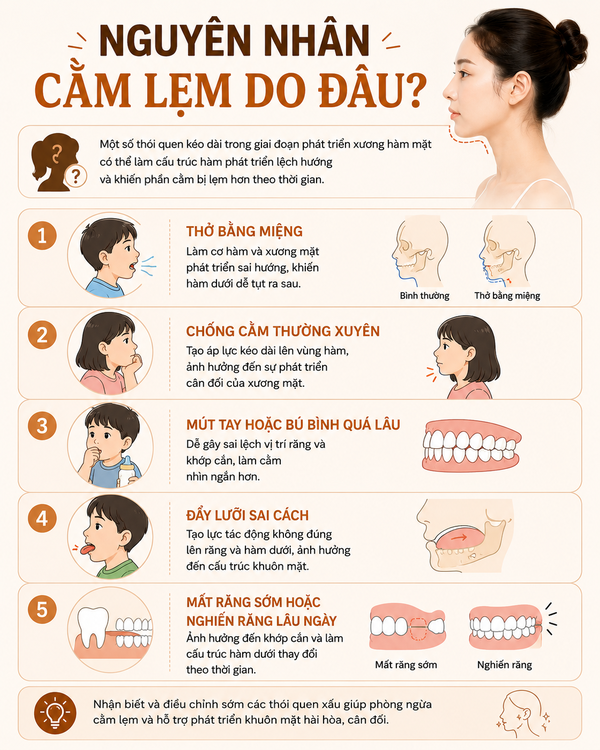
Injuries to the lower jaw or chin area can affect the normal structure and development of the bone.
If the chin area has suffered a severe impact, fracture, or injury during development, the chin may be crooked, shorter, or recessed more than normal.
Malocclusion leads to a recessed chin
Malocclusion causes an imbalance in the relationship between the upper and lower jaws, making the chin appear recessed and less prominent than it actually is. Several factors contribute to malocclusion, including:
- Overdeveloped upper jaw, causing the lips and teeth to protrude, making the chin appear more recessed.
- Underdeveloped lower jaw, resulting in a short chin, an unbalanced angle, and an indistinct jawline.
- Incorrect orthodontic treatment or restoration techniques can also cause an imbalance in the jawline if not performed properly.
How to correct a receding chin using filler injections at HBIO Clinic
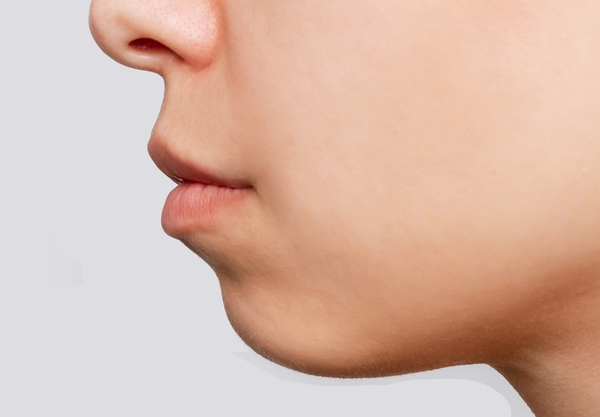
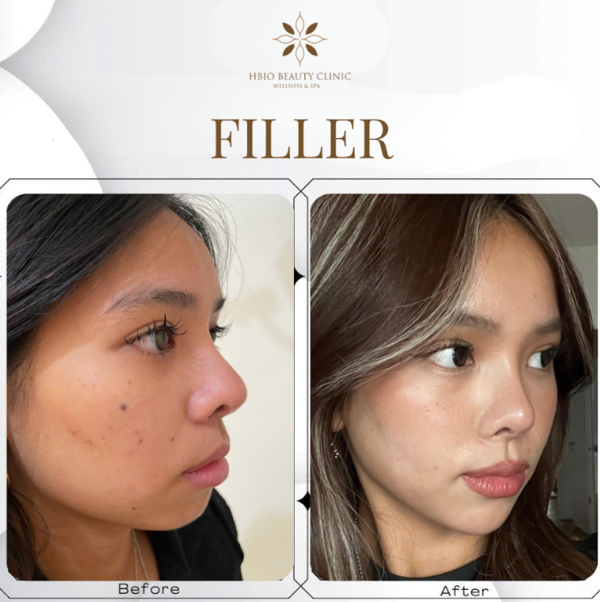
Filler injections are a non-surgical cosmetic procedure that helps improve a receding chin by adding volume to the deficient chin area. This method helps create a natural chin projection, resulting in a more balanced face and noticeably improved facial contours without the need for surgery.
At HBIO Clinic, the chin shape will be designed to suit the facial proportions for a more harmonious and natural effect after injection.
The procedure for injecting filler to improve a receding chin at HBIO Clinic
To ensure aesthetic effectiveness and minimize post-injection risks, the chin filler procedure at HBIO Clinic is performed in standardized and personalized steps according to the individual’s facial condition.
- Step 1: Examination and assessment of chin shape: The doctor checks the degree of chin recession and determines the appropriate chin ratio for the face.
- Step 2: Consultation on the appropriate amount of filler: The client is advised on the chin shape, injection location, and the number of cc of filler needed.
- Step 3: Cleaning and disinfecting the chin area: The chin area is thoroughly cleansed, dirt is removed, and it is disinfected with specialized solutions such as Povidine or Chlorhexidine to minimize the risk of infection during the injection process.
- Step 4: Applying anesthetic cream before injection: Anesthetic cream is applied evenly to the chin area and left on for about 20-30 minutes to reduce stinging and discomfort when the filler is injected into the skin.
- Step 5: Chin filler injection: The doctor uses a specialized needle or cannula to inject the filler into the subcutaneous tissue at the previously marked points, adjusting the amount of filler to create the desired projection and balanced contour of the chin.
- Step 6: Checking and adjusting the chin shape: After injection, the chin shape is checked again to ensure harmony and a more natural look.
- Step 7: Post-injection care instructions: Clients are advised on appropriate aftercare and follow-up appointments.
The outstanding advantages of chin filler injection for a receding chin
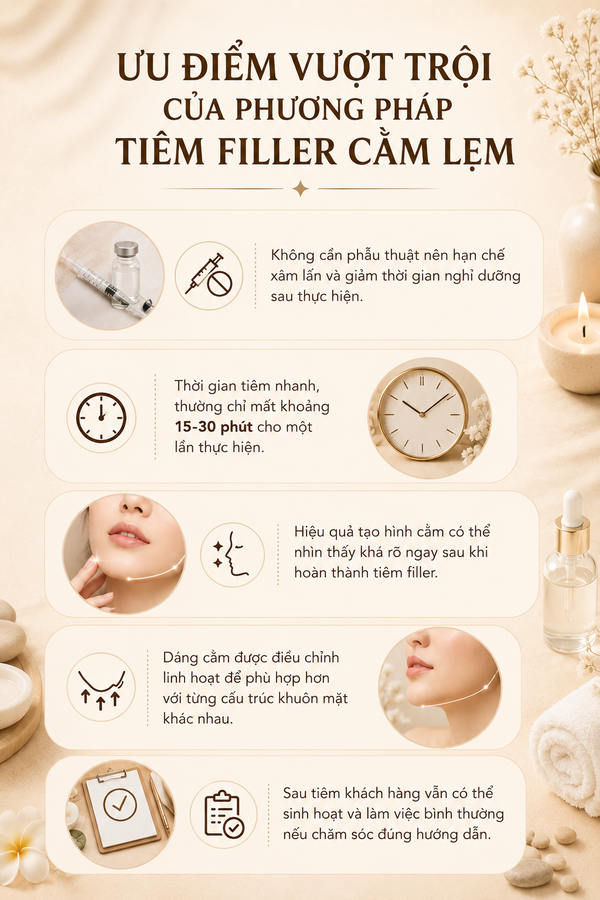
Chin filler injections are currently a popular choice due to their many advantages:
- They are non-surgical, minimizing invasiveness and reducing recovery time.
- The injection process is quick, usually taking only 15-30 minutes per session.
- The chin shaping effect is quite noticeable immediately after the filler injection is completed.
- The chin shape can be flexibly adjusted to better suit different facial structures.
- After the injection, clients can resume normal activities and work if they follow the aftercare instructions correctly.
How to care for your chin area after filler injections
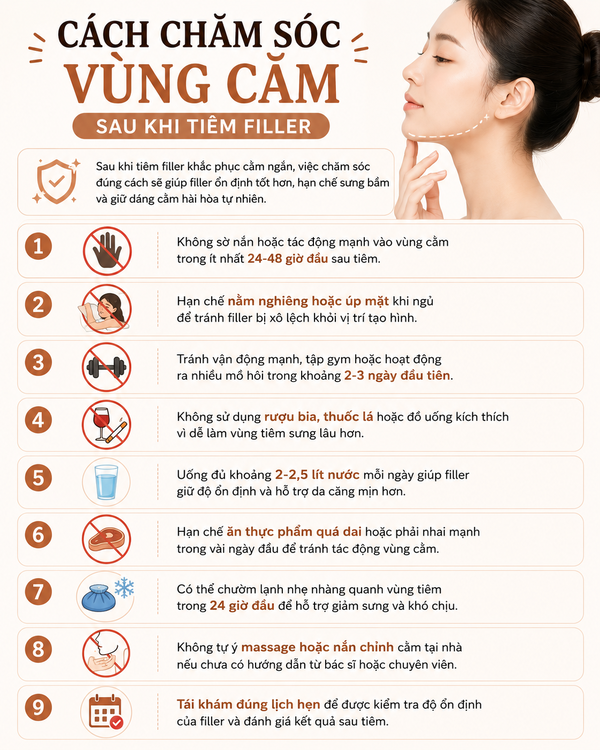
After receiving filler injections to correct a short chin, proper aftercare will help the filler stabilize better, minimize swelling and bruising, and maintain a harmonious and natural chin shape.
- Avoid touching or applying strong pressure to the chin area for at least the first 24-48 hours after injection.
- Avoid sleeping on your side or face down to prevent the filler from shifting from its position.
- Avoid strenuous exercise, gym workouts, or activities that cause excessive sweating for the first 2-3 days.
- Avoid alcohol, tobacco, or stimulants as they can prolong swelling in the injection area.
- Drink approximately 2-2.5 liters of water daily to help the filler maintain stability and promote smoother skin.
- Avoid eating foods that are too chewy or require vigorous chewing for the first few days to avoid impacting the chin area.
- You can gently apply a cold compress around the injection area for the first 24 hours to help reduce swelling and discomfort.
- Do not massage or reshape your chin at home without instructions from a doctor or specialist.
- Please return for your scheduled follow-up appointment to have the filler’s stability checked and to assess the results after the injection.
Frequently Asked Questions about the Receding Chin Correction Procedure
During consultations at HBIO Clinic, many clients often have questions regarding the effectiveness, duration, and aftercare of chin filler injections. Below are Dr. Thai’s answers:
How long does chin filler last?
Generally, chin filler can last about 8-12 months, depending on the type of filler, individual body characteristics, and aftercare. For individuals with a fast metabolism or frequent strong manipulation of the chin area, the duration may be shorter.
How many cc of filler are needed for a receding chin?
The amount of filler used usually ranges from 1-3cc, depending on the degree of chin recession and the desired chin shape. Cases with significantly receding chins or requiring a more pronounced projection may require a higher amount of filler after a direct assessment by the doctor.
Can I eat and drink normally after chin filler injections?
After filler injections, you can still eat and drink normally, but you should limit foods that are too chewy or require strong chewing for the first few days. At the same time, you should avoid alcohol and spicy foods to reduce the risk of swelling and help the filler stabilize better.
Can a receding chin be surgically corrected?
A receding chin can be completely improved with surgery in cases where the jawbone structure is significantly recessed. However, for mild to moderate cases, many people often prefer filler injections because they are less invasive and the procedure is faster.
Filler injections are currently a popular choice due to their ability to quickly reshape the chin, are less invasive, and provide a more natural result. This method also helps the chin look more harmonious with the overall face without complex surgical intervention.
However, to achieve a balanced and suitable chin shape, examination and determination of the appropriate chin proportions are very important. If you are looking to improve a receding chin with safe and aesthetically pleasing fillers, you can contact HBIO Clinic for expert advice and guidance.