Tiếng Việt
Injecting fillers into the under-eye area and tear troughs has become extremely popular today to reduce age-related wrinkles. There are some cases of failed tear trough filler injections, but it’s not too dangerous if you go to a reputable aesthetic center for immediate treatment. Let’s quickly learn about how to handle this in the article below from HBIO Clinic.
Signs of a Failed Tear Trough Filler Injection
If you’ve recently had an eye procedure and notice the following unusual symptoms, it’s very likely that the tear trough filler injection has failed and requires immediate medical intervention:
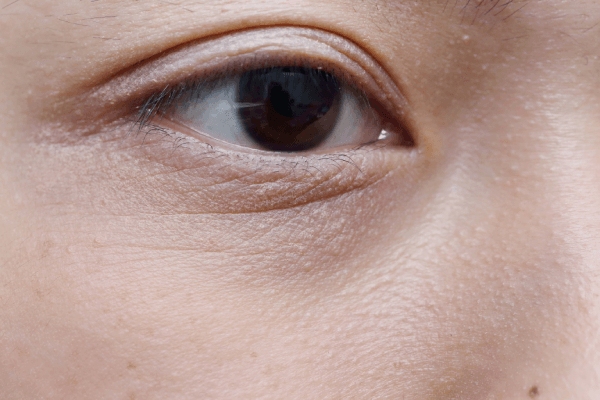
Clumping and Roughness
The filler isn’t evenly distributed or clumps together, forming hard, lumpy masses under the skin. You can see these with the naked eye or feel the hard lumps when touching the under-eye area.
Persistent Swelling
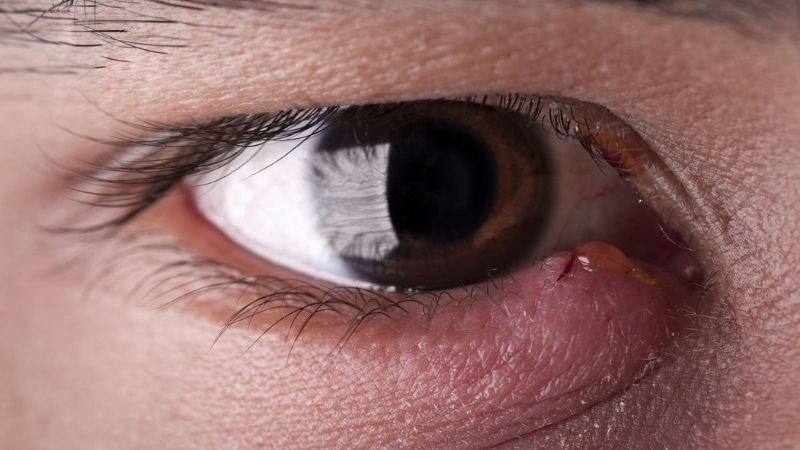
Using fillers that are too thick or injecting excessive amounts can cause puffiness and swelling in the under-eye area, making the eyes appear sunken and heavy instead of smooth and firm after a failed tear trough filler injection.

Skin Discoloration (Tyndall Effect)
When filler is injected too shallowly, close to the epidermal surface, light refracts through the filler layer, creating an unsightly bluish-gray or light blue streak. This is a typical sign of incorrect skin stratification technique resulting in a flawed injection pattern.
Serious Complications (Vascular Embolism)
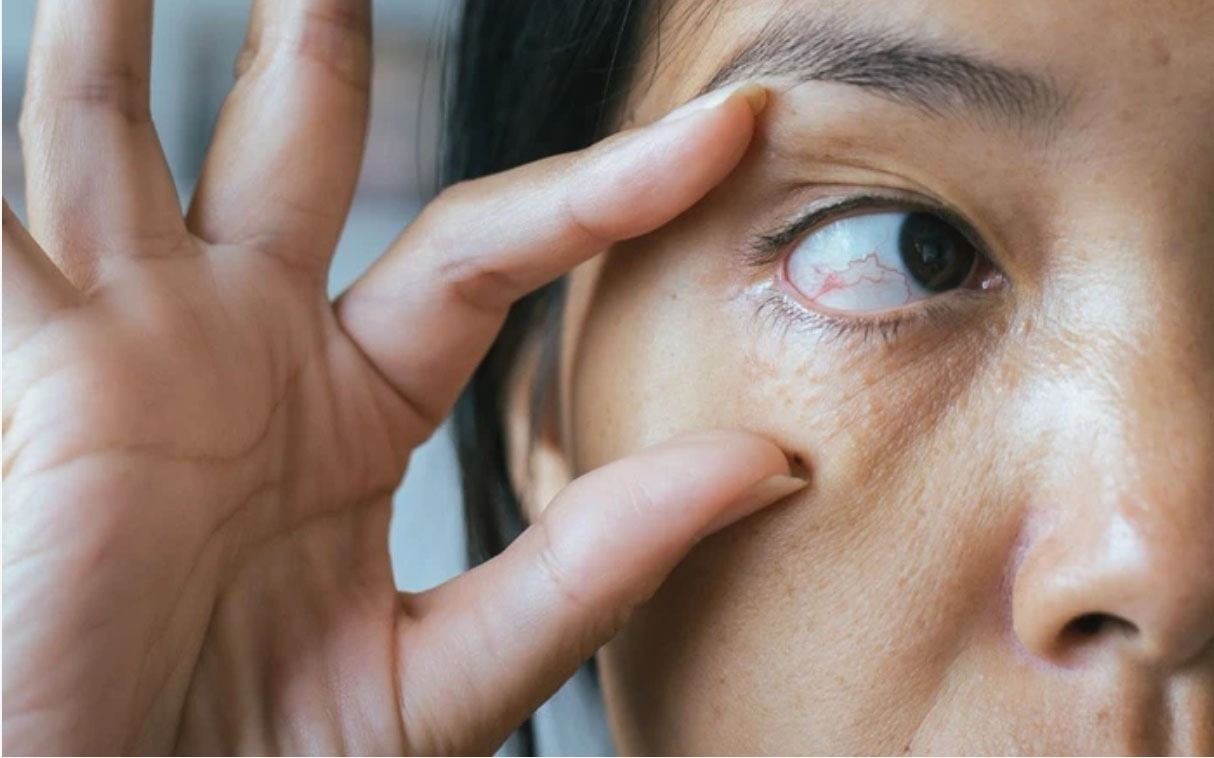
The eye area experiences intense pain, the skin turns bluish-purple, pale white, or shows signs of cell necrosis, and vision is impaired. This is a dangerous condition requiring immediate emergency treatment.
Why do filler injections in tear troughs often fail?
Understanding the reasons why filler injections in tear troughs fail will help you proactively avoid risks in future beauty treatments:
- Lack of expertise: The tear trough area requires extremely precise needle technique. Unlicensed spas using technicians without medical certifications often misidentify skin layers, leading to failed filler injections in tear troughs.
- Choosing the wrong type of filler: The delicate skin around the eyes requires a filler with a smooth texture, high elasticity, and good shaping properties. If a filler that is too thick (the type typically used for the nose and chin) is used, the injection site will be uneven and lumpy.
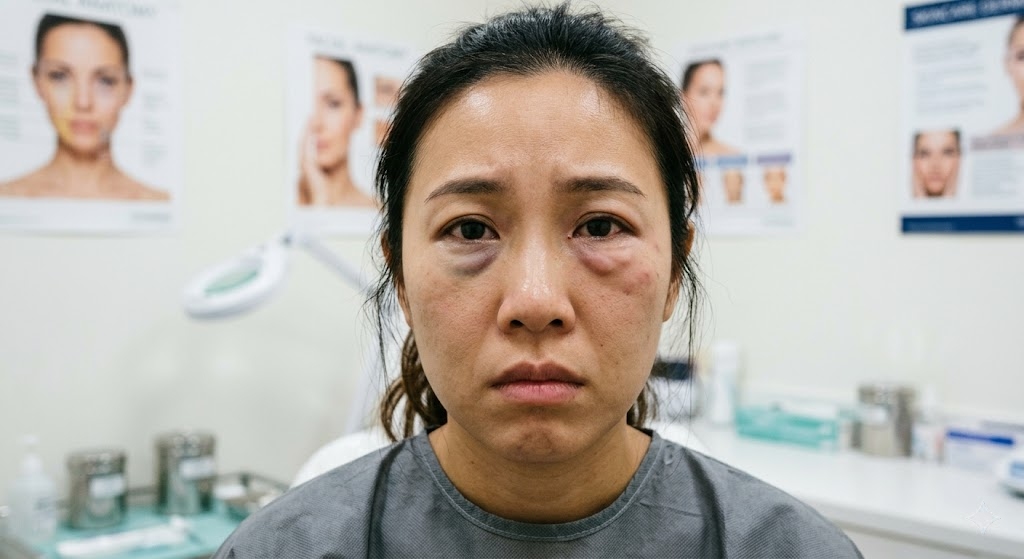
- Overdosing: Injecting too much filler into a narrow tissue area increases mechanical pressure, causing the filler to shift, spread to the upper cheek, and distort the face.
- Incorrect post-operative care: Habits like touching, massaging vigorously, or using hot steam immediately after injection can also cause the filler to shift before it has stabilized.
What to do when a filler injection in the tear trough goes wrong
When you notice signs of a failed filler injection in the tear trough, you absolutely must not try to manipulate the area at home, as this will only cause the filler to spread further. You should follow the following direct medical instructions:
Emergency filler dissolution injection
The doctor will use the enzyme Hyaluronidase to completely break down the Hyaluronic Acid compound. This active ingredient works quickly, helping to dissolve the faulty filler, eliminate clumping and swelling, and return the eye area to its original state.
Visit reputable aesthetic clinics
You need a clinical examination by a dermatologist to assess the extent of damage to the surrounding blood vessels, and then establish an appropriate recovery plan when filler injections in the tear trough go wrong.

Treating a botched lacrimal crease filler injection is far more complex than a new injection because the underlying tissue structure is already damaged or fibrotic. HBIO Clinic is proud to be a trusted medical aesthetic center specializing in receiving and correcting failed filler injection complications according to medical standards.
At HBIO Clinic, you can rest assured with our comprehensive treatment process:
- Experienced dermatologists directly examine and analyze the skin using AI technology to accurately identify the location of filler leakage or clumping.
- We use genuine, high-quality dissolving enzymes to thoroughly and quickly remove the faulty filler without causing irritation or skin erosion.
- The procedure is performed in a completely sterile environment, ensuring safety and preventing any risk of post-operative infection.
- After the eye area is completely stable, doctors at HBIO Clinic will design a new treatment plan (using high-grade Juvederm filler or PLLA/PCL bioactive substances) to help you recreate a smooth, natural-looking lacrimal crease.
Patiently waiting for filler to dissolve naturally
For very minor shape corrections (only slight deviation in shape), if you don’t want to have the filler dissolved, you can wait for it to naturally break down after a few months, but this requires close supervision by a doctor.
Frequently Asked Questions about Failed Tear Trough Filler Injections (Q&A)
Is it painful to dissolve filler after a failed tear trough filler injection?
The dissolution procedure is very quick. You will be given a topical anesthetic before the procedure, so you will only feel a slight stinging sensation, which is completely comfortable.
How long does it take for the eye area to return to normal after the dissolution injection?
The enzyme hyaluronidase breaks down filler very quickly; usually, after 24 to 48 hours, the spilled filler will dissolve completely and the swelling around the eyes will subside.
Can a failed tear trough filler injection cause blindness?
There is a risk if filler is injected directly into a blood vessel, causing retinal vascular occlusion if the filler is not dissolved promptly within the “golden hour.” Therefore, you need to choose a highly skilled doctor to avoid this complication.
How long after a failed filler dissolution procedure can I get a new injection?
You should wait 1 to 2 weeks for the skin under your eyes to fully recover before undergoing a new filler treatment at HBIO Clinic.
The phenomenon of failed tear trough filler injections can be safely treated if you intervene early and correctly. Please contact HBIO Clinic immediately to receive support from experts in handling complications and to schedule an appointment as soon as possible!