Tiếng Việt
Many people still wonder whether they should “wash their face first or apply a face mask first” to better absorb nutrients and reduce breakouts. In fact, you should wash your face before applying a face mask to remove excess oil and dirt, allowing the active ingredients in the mask to penetrate more effectively. In this article, HBIO Clinic will help you understand the correct skincare order and important considerations when using face masks.
Should you wash your face first or apply a face mask first? The correct skincare order
The answer to the question of whether to apply a face mask first or wash your face first is that you should prioritize washing your face first to optimize the effects of the face mask.

Wash your face before applying a face mask.
Washing your face beforehand has important benefits:
- It helps remove dirt and excess oil from the skin: Washing your face helps remove sebum, fine dust, sunscreen, and bacteria that accumulate on the skin’s surface throughout the day.
- It helps nutrients from the mask absorb better: When the skin is clean and pores are clear, the active ingredients in the mask will be absorbed into the skin more easily.
- It prevents clogged pores and reduces the risk of breakouts: Applying a mask to unclean skin can easily cause excess oil and bacteria to accumulate, clogging pores.
The correct face washing and mask application process
Below are the basic steps when washing and applying a face mask in your skincare routine (applicable to all types of skincare masks):
- Step 1: Clean your hands
First, you need to wash your hands thoroughly with soap to remove bacteria and dirt. This is a small but very important step to avoid transferring impurities to your face during the skincare process.
- Step 2: Moisten your face
Use warm water to wet your entire face. The moderately warm temperature helps to slightly open pores, thus supporting more effective cleansing.
- Step 3: Use facial cleanser
Take a small amount of facial cleanser, lather it with a little water, and apply it to your skin. Gently massage in circular motions to deeply cleanse dirt and excess oil. Avoid scrubbing vigorously, especially around the eyes, as this is a very sensitive area.
- Step 4: Rinse with water
After cleansing, rinse your face with warm water until all foam and product residue are completely removed, leaving your skin feeling refreshed.
- Step 5: Dry your skin
Use a soft towel or cotton pad to gently pat your face dry. Avoid scrubbing vigorously as this can damage or irritate the skin.
- Step 6: Apply a face mask
Next, apply or spread the face mask evenly over your entire face, avoiding areas such as the eyes and lips. Leave it on for about 15-20 minutes to allow the skin to absorb the nutrients.
- Step 7: Continue with other skincare steps
After removing or rinsing off the mask, you should complete the process with products such as toner, serum, and moisturizer to help balance moisture, nourish, and protect your skin.
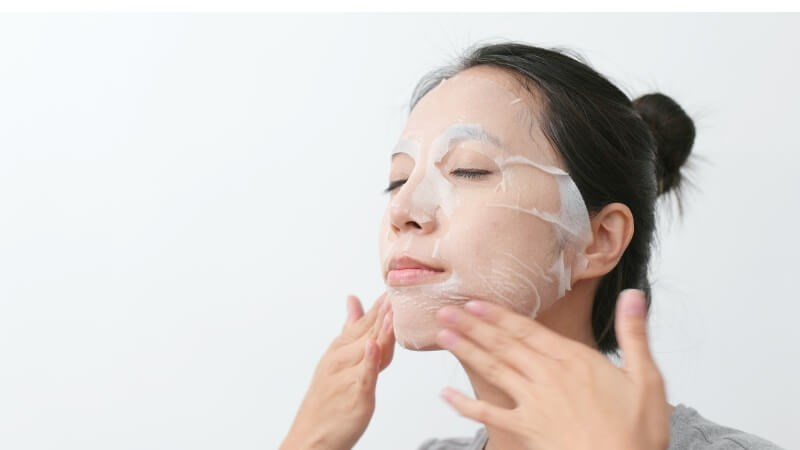
Why Wash Your Face Before Applying a Face Mask?
Washing your face before applying a face mask is an important step to support your skin and avoid many unwanted reactions:
Cleanses excess oil and dirt from the skin
After a long day, fine dust, sunscreen, makeup, and sebum accumulate on the skin’s surface. If not cleaned before applying a mask, these impurities can easily clog pores and hinder skin respiration.
Applying a mask to unclean skin can trap excess oil and bacteria inside the pores. This increases the risk of blockage and acne formation.
Helps nutrients in the mask absorb more effectively
When the skin is thoroughly cleansed, the skin’s surface is more open, allowing the active ingredients in the mask to come into direct contact with the skin. As a result, nutrients can be absorbed more effectively and work better.
Washing your face before applying a face mask also helps to moisturize and nourish the skin more effectively. After using a face mask, skin is often noticeably softer, smoother, and more radiant.
Reduces the risk of breakouts and irritation.
Unclean skin is a breeding ground for bacteria, excess oil, and dirt to accumulate on the skin’s surface. Applying a face mask to dirty skin increases the risk of irritation and breakouts.
This is especially common in people with oily, acne-prone, or sensitive skin. If not properly cleansed before applying a face mask, the skin may experience redness, clogged pores, or more breakouts.

Do you need to wash your face after applying a face mask?
Whether or not you need to wash your face after applying a face mask depends on the type of mask and the condition of your skin.

Depending on the type of mask:
Each type of mask has a different texture, mechanism of action, and application method, so whether or not you need to wash your face afterward will vary. Besides considering whether to wash your face or apply the mask first, you should also understand how to cleanse your skin after application for better skincare results.
- Sheet masks: With sheet masks that have a thin, lightweight essence and absorb quickly, you usually don’t need to wash your face afterward. If you have oily or easily clogged skin, you can gently rinse with clean water to keep your skin feeling fresh and comfortable.
- Clay masks: Clay masks need to be completely rinsed off after use to avoid dryness and product residue. You should also avoid letting the mask dry and harden for too long, as this can cause your skin to lose its natural moisture and become more irritated.
- Sleeping masks: Sleeping masks are usually designed to be left on the skin overnight, so you don’t need to wash your face immediately after application. You only need to cleanse your skin the next morning with a gentle facial cleanser to remove any remaining product.
- Peel or deep-cleansing masks: With peel or deep-cleansing masks, you should rinse thoroughly to minimize skin irritation.
When should you wash your face again after applying a mask?
In some cases, washing your face again after applying a mask will make your skin feel more comfortable and reduce the risk of clogged pores.
If your skin feels greasy or congested after applying a mask, you can gently rinse with clean water to allow your skin to breathe better.
When your skin shows signs of prolonged stinging or discomfort, gentle cleansing will help reduce the risk of skin irritation.
For masks with a very thick or difficult-to-absorb essence texture, gently washing your face after use can help keep your skin dry and allow it to absorb subsequent skincare steps more easily.
Important Notes on Using Facial Cleansers and Face Masks from HBIO Clinic Experts
Besides understanding whether to apply a face mask before or after cleansing, you also need to follow some important guidelines to avoid unwanted reactions such as:
- Choose a facial cleanser suitable for your skin type to effectively cleanse without causing dryness, tightness, or disrupting the skin’s natural moisture balance. Oily skin should prioritize gel or light foaming cleansers, dry skin should choose gentle, moisturizing cleansers, and sensitive skin should avoid fragrances and harsh detergents.
- Do not wash your face too many times a day; only twice a day (morning and evening) is recommended to avoid weakening the skin’s protective barrier.
- Avoid using facial cleansers with a very high pH level as this can easily cause dryness, irritation, and worsen rough skin texture. The ideal pH level should range from 5.0–6.5 to maintain the skin’s protective barrier and limit water loss.
- Always remove makeup before cleansing, even if you haven’t applied makeup, to completely remove dirt and sunscreen. You should only apply face masks 2-3 times a week; avoid overuse, which can overload your skin and make it more sensitive.
- Do not leave masks on your skin for too long, especially clay masks, as they can draw moisture back out, leaving your skin dry and tight. The ideal time is usually 15-20 minutes for the skin to absorb the nutrients.
- Always moisturize after applying a mask to lock in nutrients and help your skin maintain a soft, smooth, and balanced state.
- Listen to your skin’s reaction after each use; if irritation occurs, stop and adjust the product accordingly.

Questions Regarding Skincare and Cleansing Procedures
During skincare treatments at HBIO Clinic, many clients often have questions about how to properly apply face masks and cleanse their skin. Below are the answers from our experts:
How many times a week should I apply a face mask?
Generally, you should apply a face mask about 2-3 times a week to ensure your skin receives consistent hydration and nourishment. Applying it too frequently can overload your skin with nutrients or make it more sensitive.
Should I wash my face with facial cleanser after applying a face mask?
You shouldn’t use facial cleanser immediately after applying a sheet mask or hydrating mask as it can remove the nourishing layer on your skin. If your skin is very oily, a gentle rinse with clean water is sufficient.
What is the best time to apply a face mask?
Evening, after cleansing, is usually the ideal time to apply a face mask because the skin is relaxed and absorbs nutrients better. Additionally, you can also apply a face mask after sun exposure or when your skin shows signs of dryness and lack of moisture.
Is it okay to use multiple types of masks at the same time?
You can combine different types of masks for different skin areas if your skin has multiple problems that need improvement. However, you shouldn’t use too many masks containing strong active ingredients at the same time to avoid irritation or making your skin more sensitive.
In short, besides choosing whether to wash your face first or apply a mask first, you also need to understand the important considerations of each skincare routine. When choosing the right routine, your skin will not only be cleansed but also absorb nutrients better, resulting in a smooth and healthy appearance.
Hopefully, the above sharing from HBIO Clinic can support you in your skincare routine, and don’t forget the important tips from HBIO Clinic experts for bright and healthy skin.