Tiếng Việt
With over 10 years of experience assisting clients with skin problems, the HBIO Clinic team has noticed that many people still confuse normal and sensitive skin. Numerous cases involve choosing the wrong cosmetics, leading to skin irritation, rashes, or prolonged peeling. In this article, HBIO Clinic will share how to identify and skincare for your skin so you can better understand your skin type.
How to distinguish between normal and sensitive skin
Not everyone knows exactly what type of skin they have. In fact, many people confuse normal and sensitive skin, leading them to choose unsuitable cosmetics, causing their skin to become irritated or deteriorate faster. Below are some simple ways to help you accurately identify your skin condition.
Observe after washing your face
This is the easiest way to identify normal skin, and experts at HBIO Clinic often guide clients to check at home.
After washing your face, if after about 15-30 minutes without using any additional skincare products, your skin still feels soft, comfortable, and not dry, tight, or tingly, then you most likely have normal skin.
Conversely, sensitive skin often exhibits mild stinging, tightness, or tiny red patches immediately after contact with water or cleansers.
Many customers mistakenly believe this is just a sign of “normal dehydration,” but in reality, it could be a warning sign that the skin’s protective barrier is damaged.
Use oil-absorbing paper
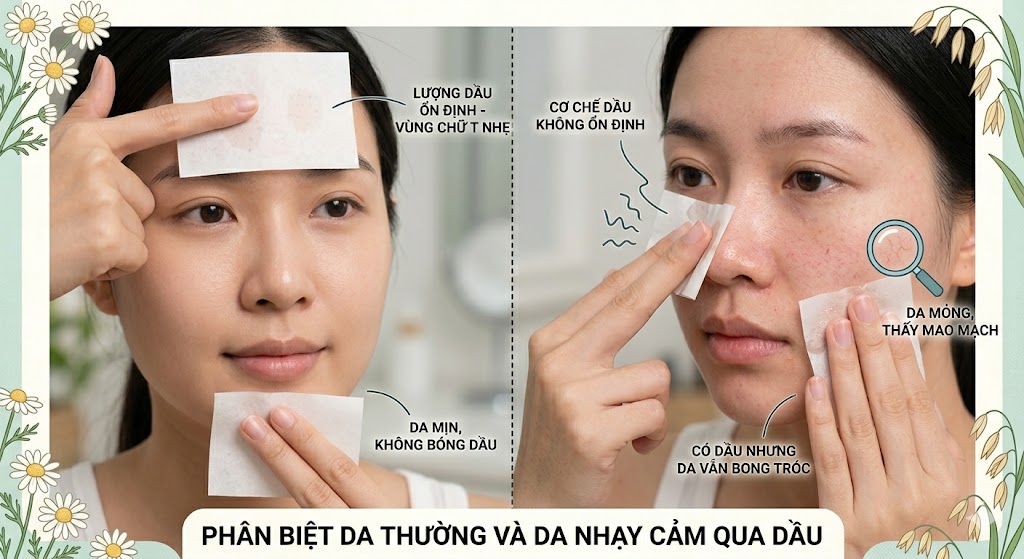
Another way to distinguish between normal and sensitive skin is to check the amount of oil on the skin. After about 1-2 hours after washing your face, use oil absorbent paper to gently apply it to your forehead, nose and chin.
With normal skin, the amount of oil secreted is quite stable and only slightly concentrated in the T-zone. The skin surface still looks smooth, not too oily or dry.
Meanwhile, sensitive skin often has an unstable oil secretion mechanism. Some people have just poured oil but their skin is still peeling. In addition, the skin surface is often thinner and small capillaries under the skin are easily visible.
Reactions to the environment and cosmetics
Think back to the last time you experienced a change in weather or used a new moisturizer. Normal and sensitive skin differ greatly in their resilience.
Normal skin rarely reacts negatively to external factors. Sensitive skin, on the other hand, will immediately “protest” by itching, burning, or developing redness when exposed to dirt, harsh sunlight, or fragrance ingredients in cosmetics.
How to care for normal and sensitive skin
Each skin type has different characteristics and care needs. Applying the right methods will help keep your skin healthy and minimize problems such as irritation, dryness, or excessive oil production.
Normal skin
Normal skin is considered the ideal skin type that many people desire. However, you should still maintain a proper skincare routine to prevent premature aging.
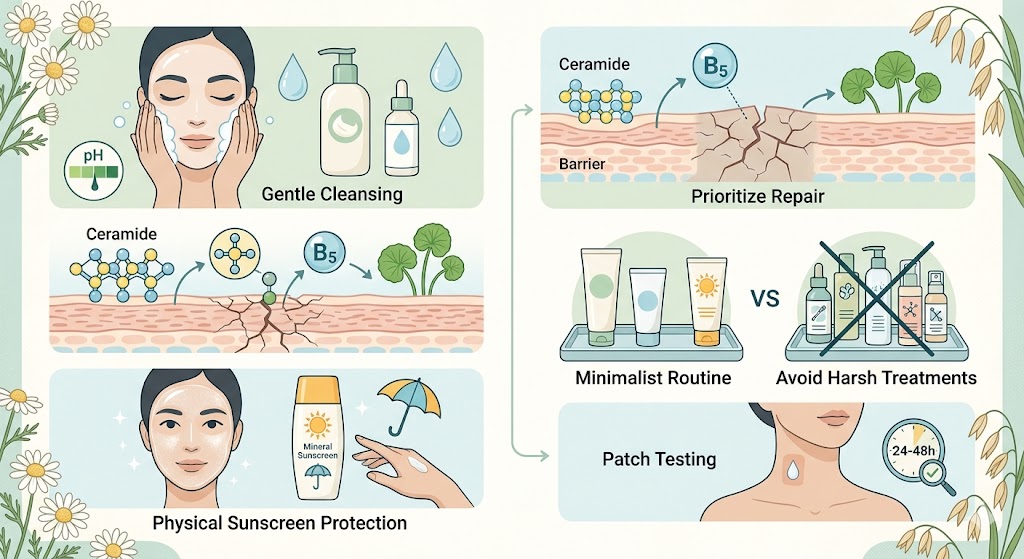
- Prioritize facial cleansers with a balanced pH of around 5.5.
- Moisturize with lightweight products containing Hyaluronic Acid.
- Use sunscreen daily to protect natural collagen.
- You can combine Vitamin C or low-concentration Retinol to maintain skin elasticity.

According to experts at HBIO Clinic, many people with normal skin still risk making their skin more sensitive if they use unsuitable cosmetics for a long time.
Sensitive skin
Unlike the stability of normal skin, sensitive skin is considered “fussy” and requires much more careful care. Therefore, the most important principle in sensitive skin care is minimalism and restoration.
- Avoid using too many treatments at once.
- Focus on: Gentle cleansing – Restoration – Physical sun protection.
- Prioritize ingredients such as Ceramide, Panthenol (B5), Centella, or chamomile for immediate skin soothing.
- Always test new products on a small area of skin under the jawline for 24-48 hours before applying them to the entire face.
Advice from HBIO Clinic experts
Whether you have normal or sensitive skin, listening to your skin every day is crucial. A suitable routine doesn’t need too many steps, but it should be tailored to your current skin condition.
If you experience prolonged redness, persistent breakouts, or unexplained irritation, you should consult a dermatologist for a proper skin analysis and advice.

Questions related to normal and sensitive skin
Can normal skin become sensitive skin?
Yes. Normal skin can become sensitive when its protective barrier is damaged by environmental factors, unsuitable cosmetics, or excessive skincare.
Is sensitive skin a permanent skin condition?
Not necessarily. In many cases, sensitive skin is only a temporary condition and can improve with proper care and restoration.
Hopefully, this article has helped you clearly distinguish between normal and sensitive skin, as well as understand how to care for each skin type appropriately. Understanding your skin is the first step to achieving a healthy, beautiful, and confident appearance in the long run. HBIO Clinic is always with you in building healthy skin from the root!