Tiếng Việt
Through years of consulting with clients at HBIO Clinic, we have found that the “malar mound” depression—a hollow area beneath the cheekbone—is a major source of concern for many women. This flaw can make the face appear gaunt and aged. Join HBIO Clinic as we explore the causes of this condition and how to regain your confidence.
What is a malar mound depression, and how can it be identified?
A malar mound depression is a condition characterized by volume loss or sagging of the soft tissue beneath the cheekbone, resulting in a distinct hollow on the face.
Unlike general facial thinness, a depression in this specific area often creates a visible groove separating the cheekbone from the lower cheek, giving the face a lifeless, tired appearance.
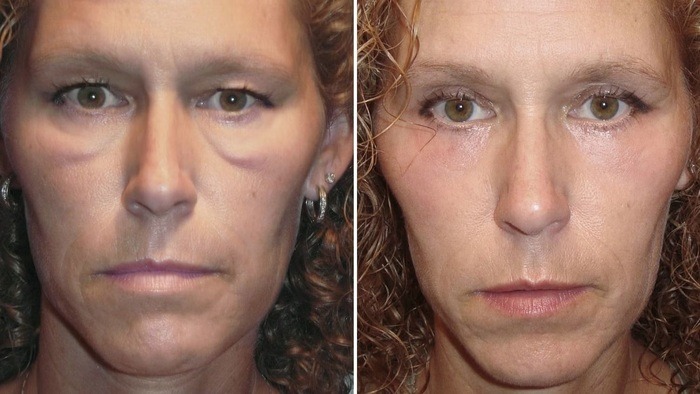
A typical sign of a malar mound is the appearance of sagging fat pockets or wrinkled skin directly beneath the cheekbones. This depression is clearly visible in profile or under direct lighting, where the resulting shadows create a tired, worn-out appearance.
In reality, malar mounds affect not only older adults but also younger individuals, often due to facial bone structure. When a malar mound becomes prominent, the face loses its natural fullness, and facial features appear sharper and more angular.
Causes of malar mounds
According to specialists at HBIO Clinic, the formation of malar mounds typically results from a combination of intrinsic and extrinsic factors, including:
- Genetics: Inherited traits such as low cheekbones or a narrow jawline provide insufficient structural support for soft tissues, leading to the formation of malar mounds.
- Aging: The natural decline of collagen and elastin reduces skin elasticity, causing the tissue around the cheekbones to sag and form malar mounds.
- Sudden weight loss: Rapid loss of subcutaneous fat prevents the skin from retracting quickly enough, resulting in a hollow, sunken appearance.
- Changes in bone structure: Over time, facial bones tend to undergo slight resorption, reducing structural support and making malar mounds more pronounced.
- Unhealthy lifestyle: Habits such as staying up late, smoking, or poor nutrition accelerate the aging process in the cheek area.
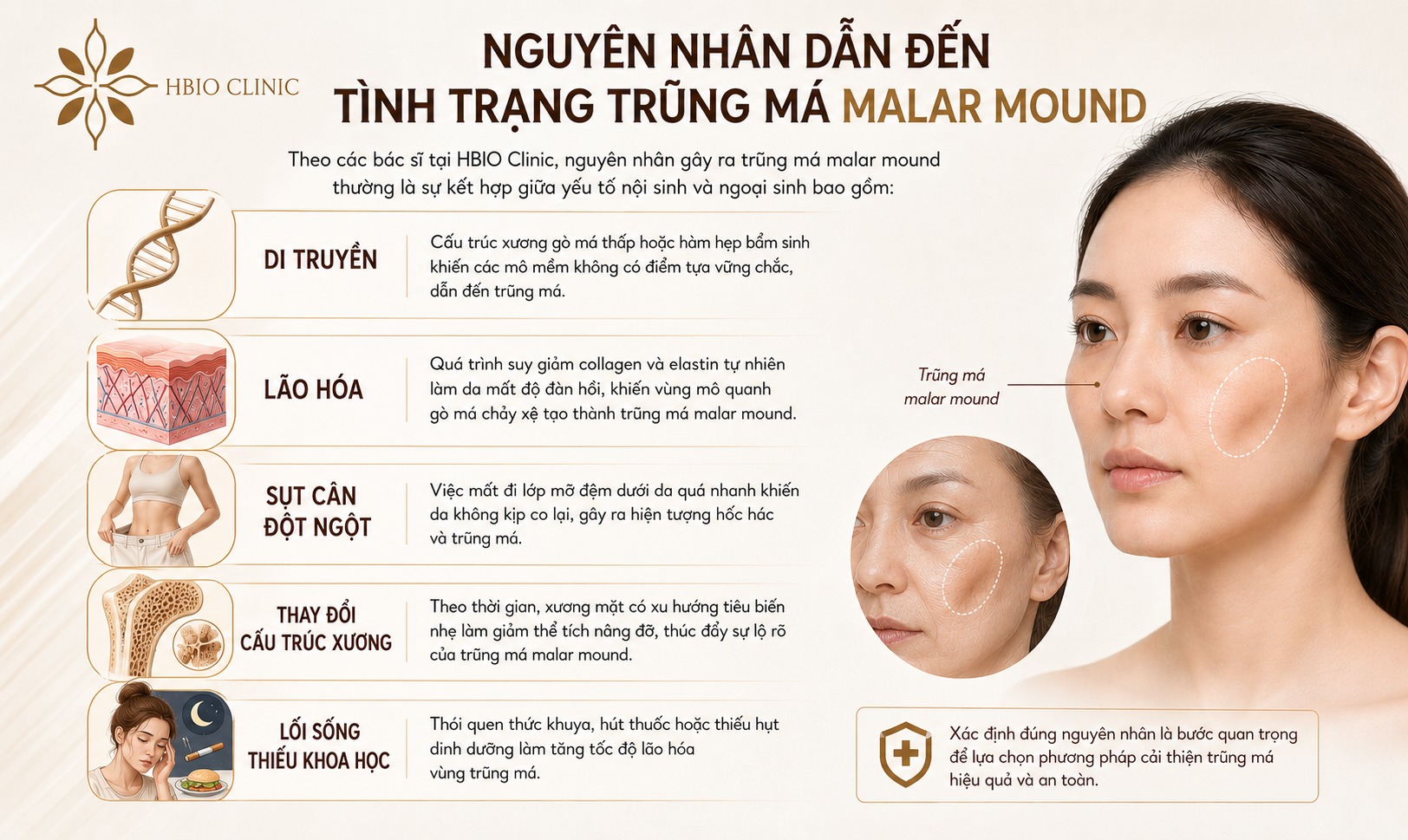
There are various causes of cheek depressions (such as malar mounds), but for the majority of clients at HBIO Clinic, the issue stems from aging or lifestyle factors. HBIO Clinic designs a tailored restoration plan for each specific case to optimize both treatment effectiveness and duration.
How do malar mounds and cheek depressions affect your health?
Cheek depressions do not merely impact your outward appearance—making the face look gaunt and aged—but can also serve as a “warning signal” for underlying health issues that should not be ignored:
1. A sign of vitamin and essential nutrient deficiencies
A depletion of deep-layer collagen is the direct cause of malar mounds. However, the breakdown of this collagen network is often closely linked to severe deficiencies in vital micronutrients such as Vitamin C, Vitamin E, or Zinc.
2. Signs linked to thyroid disorders and immune system decline
Rapid and deep hollowing of the cheek area can result from a compromised immune system or thyroid dysfunction. This deterioration severely impacts subcutaneous connective tissue, causing the fat layers that support the mid-face to rapidly diminish.
3. Warning signs of lymphatic system disorders and abnormal fluid retention
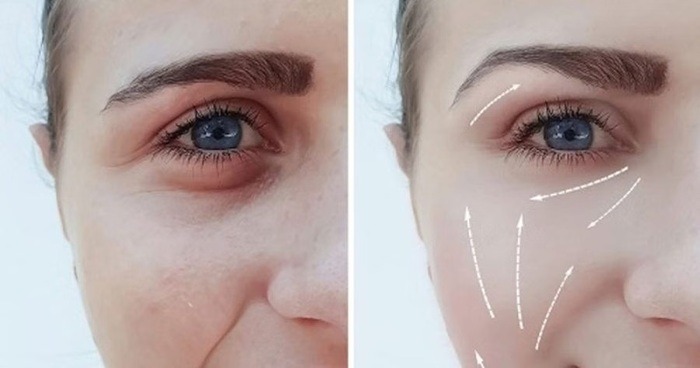
The sudden appearance of “Malar Mounds” (cheek depressions/bags), accompanied by large, swollen under-eye bags, may signal lymphatic system blockage or abnormal fluid accumulation in the eye-cheek region.
Top 4 high-tech solutions for treating cheek depressions
To comprehensively address Malar Mounds—from deep structural layers to the skin’s surface—HBIO Clinic employs the most advanced non-surgical aesthetic technologies, delivering safe and lasting results for your skin:
1. Micro-lifting technology: Ultherapy / Thermage FLX
This method utilizes focused ultrasound energy (Ultherapy) or monopolar radiofrequency (Thermage) to target the SMAS connective tissue layer, powerfully stimulating the body’s natural collagen production.
- Advantages: Non-invasive, painless, and requires no downtime; it tightens loose collagen fibers and naturally lifts the cheek muscle layers.
- Disadvantages: Volumizing effects depend on the body’s natural collagen production, so it takes 1 to 3 months to see the most noticeable results.
- Recommended for: Individuals with mild to moderate cheek depressions and skin laxity or sagging due to natural aging who wish to improve their facial contours without surgery.
2. Dermal Filler Injections (Hyaluronic Acid)
Filler injection involves introducing authentic Hyaluronic Acid into hollow areas to instantly restore tissue volume.
- Advantages: Immediate results—achieving a fuller, youthful appearance in just 15–30 minutes; quick procedure and reasonable cost.
- Disadvantages: Temporary results (lasting 12–24 months); requires an experienced physician to avoid risks such as filler migration or swelling.
- Recommended for: Individuals with deep cheek hollows due to congenital lack of fatty tissue, or those needing quick aesthetic enhancement for important events.
3. Autologous Fat Grafting (Tissue Regeneration)
This method utilizes excess fat—extracted and purified from your own body (e.g., abdomen or thighs)—and grafts it directly into the sunken cheek areas.
- Advantages: Near-perfect (100%) biocompatibility with absolutely no risk of rejection; surviving fat cells ensure long-lasting fullness.
- Disadvantages: Requires complex fat extraction and purification techniques; the donor site requires a separate recovery period.
- Recommended for: Individuals with extensive cheek hollows or severe sunkenness who seek a natural, long-lasting volumizing solution.
4. Epidermal Rejuvenation Laser Technology
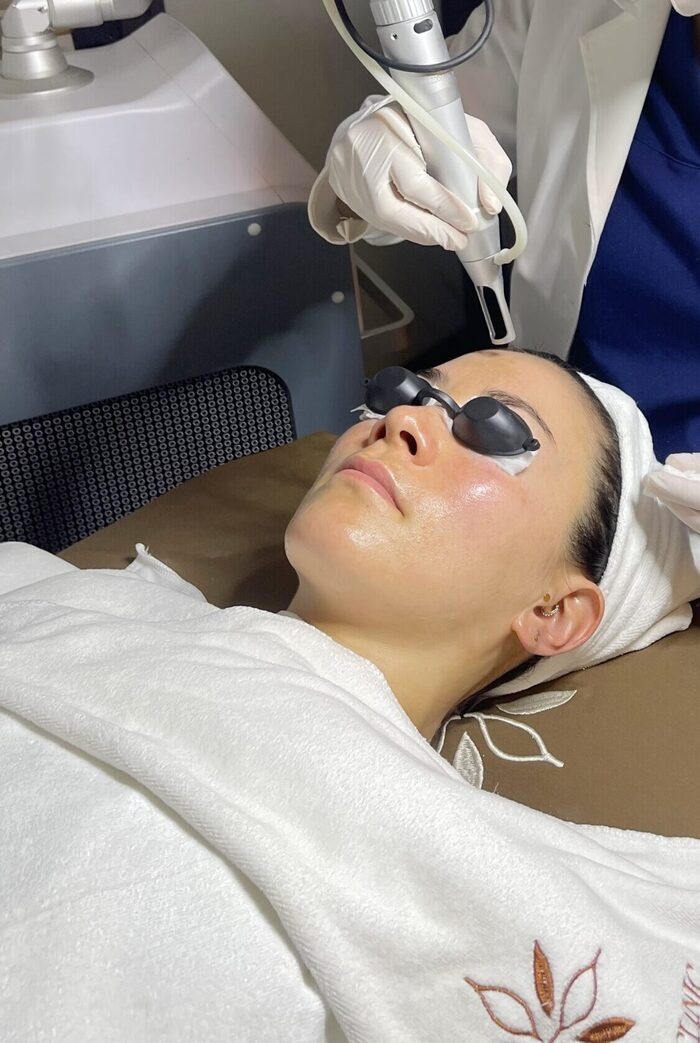
This laser technology utilizes intelligent light wavelengths that target both the epidermis and dermis to even out skin tone and stimulate fractional regeneration.
- Advantages: Smooths and firms the cheek area, minimizes pores, and softens fine surface lines.
- Disadvantages: Primarily improves the skin’s surface; it cannot replenish lost deep-tissue fat volume.
- Recommended Use: Ideal as a complementary treatment alongside fillers or Ultherapy to optimize skin texture for those with rough or uneven cheek skin.
Don’t let hollows or depressions affect your confidence in daily interactions. Contact HBIO Clinic today for a personalized consultation on correcting cheek hollows and begin your journey to reclaiming a radiant, youthful look!