Tiếng Việt
With over a decade of experience in dermatology and a history of supporting thousands of Vietnamese women, HBIO Clinic deeply understands the struggles associated with dry, sensitive skin. Even a slight change in the weather or the use of an unsuitable product can cause the skin to become red, irritated, and flaky. In this article, HBIO Clinic shares a detailed guide on how to care for dry, sensitive skin safely and effectively, helping it recover and regain its health from within.
Medically-backed skincare steps for dry, sensitive skin
Instead of overloading the skin with 7–8 layers of products, the standard protocol at HBIO Clinic outlined below focuses on gentleness and maximum effectiveness.
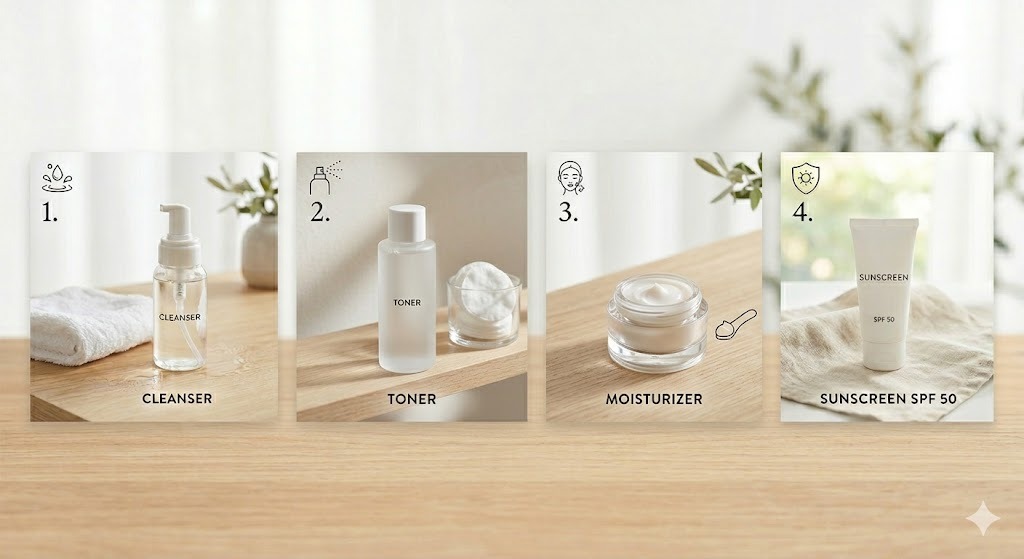
Morning skincare routine
Step 1: Gentle cleansing
Since the skin isn’t heavily soiled in the morning, a low-foaming cleanser with a pH of around 5.5—and free from harsh sulfates—is sufficient.
Step 2: Hydrating toner or lotion
Opt for an alcohol-free toner containing Hyaluronic Acid (HA) or chamomile extract to instantly soothe the skin.
Step 3: Moisturizing cream
Dry, sensitive skin requires a rich cream rather than a lightweight gel. Products containing Ceramide, Squalane, or Glycerin help prevent moisture loss throughout the day.
Step 4: Physical sunscreen
Sunscreen is an essential step in caring for dry, sensitive skin. Prioritize physical sunscreens containing Zinc Oxide or Titanium Dioxide; these are extremely gentle and do not cause the stinging sensation often associated with chemical sunscreens.
Evening skincare routine
Step 1: Oil or balm-based makeup remover
Avoid makeup removers that require excessive rubbing with a cotton pad. Oil-based cleansers gently dissolve dirt and sunscreen without causing friction that could damage the skin.
Step 2: Gentle cleanser
After removing makeup, use a gentle cleanser to deep-cleanse without stripping away the skin’s natural oils.
Step 3: Intensive repair serum
This is the optimal time for the skin to absorb nutrients. Prioritize serums containing B5 (Panthenol), Ceramides, or Niacinamide; these active ingredients effectively soothe, repair, and strengthen the skin’s protective barrier.
Step 4: Seal in moisture
Nighttime is when the skin undergoes its most intense regeneration. A richer moisturizer helps keep the skin soft and well-hydrated by the next morning.
Ingredients to “choose” and “avoid” when caring for dry, sensitive skin
To effectively care for dry, sensitive skin, you need to thoroughly understand the list of cosmetic ingredients before use.
| Ingredients to prioritize | Ingredients to avoid |
| Hyaluronic Acid (HA): Multi-layer hydration. | Drying alcohols (Alcohol Denat./Ethanol): Dehydrate the skin. |
| Ceramide: restores the skin’s protective barrier. | Artificial fragrances (Parfum/Fragrance): A leading cause of allergies. |
| Vitamin B5 (Panthenol): Soothes and reduces redness and irritation. | Foaming agents SLS/SLES: Strip and dry out the skin. |
| Glycerin and Squalane: Lock in moisture and smooth the skin’s surface. | High concentrations of AHA/BHA: Prone to causing overload and severe peeling. |
A classic mistake that makes skin increasingly dry and sensitive.
During consultations, HBIO Clinic has observed that many people who are diligent about their skincare routine still fail to see improvement due to the following common mistakes:
- Washing the face with water that is too hot: Hot water strips away the skin’s natural oils, leaving it drier and more prone to flaking.
- Over-exfoliating: Dry, flaky skin does not mean the skin is dirty; excessive exfoliation rapidly compromises the skin’s protective barrier.
- Using too many potent active ingredients: High concentrations of Retinol, AHAs, or Vitamin C can overwhelm sensitive skin if used incorrectly.
- Applying moisturizer to completely dry skin: The best time to apply moisturizer is while the skin is still slightly damp, as this helps lock in moisture much more effectively.

Intensive skin recovery solution at Hbio Clinic
While a home-care routine is essential for dry, sensitive skin, achieving true skin health and putting an end to reactive redness requires a personalized, intensive recovery treatment.
At Hbio Clinic, we avoid “cookie-cutter” approaches. Every client receives:
- A skin analysis using advanced AI technology to precisely assess the extent of damage to the skin’s protective barrier.
- A tailored rapid-recovery regimen utilizing nutrient electroporation technology (delivering ingredients like B5 and pure Ceramide), which drives nutrients up to 20 times deeper into the epidermis compared to standard topical application.
- Close, one-on-one monitoring by a team of experienced specialists until your skin is truly healthy, supple, and radiant.

We hope this article has helped you better understand how to safely and effectively care for dry, sensitive skin. Healthy, beautiful skin is not achieved by using an abundance of products, but rather through a suitable routine and a true understanding of your own skin. If you are experiencing persistent dryness, flaking, redness, or irritation, do not hesitate to contact HBIO Clinic for a skin analysis, professional consultation, and a tailored, intensive recovery regimen designed specifically for your skin.