Tiếng Việt
With over a decade of experience in non-surgical aesthetic medicine, HBIO Clinic has treated hundreds of cases involving complications from liquid silicone injections mislabeled as “budget-friendly fillers.” Many women remain unaware of the risks and do not know how to distinguish between these two substances. Drawing on its practical expertise, HBIO Clinic explains how to accurately differentiate between fillers and silicone, helping you safeguard your beauty.
Is it possible to check for fillers or silicone at home?
It is impossible to make an accurate assessment simply by self-examination or visual inspection at home. Sensations of softness or hardness, or the persistence of the injected area, serve only as rough indicators. You should not attempt to massage, squeeze, or inject dissolving agents yourself. If you have concerns, consult a doctor and undergo appropriate diagnostic procedures to ensure a reliable assessment.
5 ways to accurately distinguish between fillers and silicone
The following signs, compiled from clinical practice at HBIO Clinic, will help you self-check or evaluate the product before and after injection.
1. Check for reaction to the dissolving injection
This is considered the most accurate method.
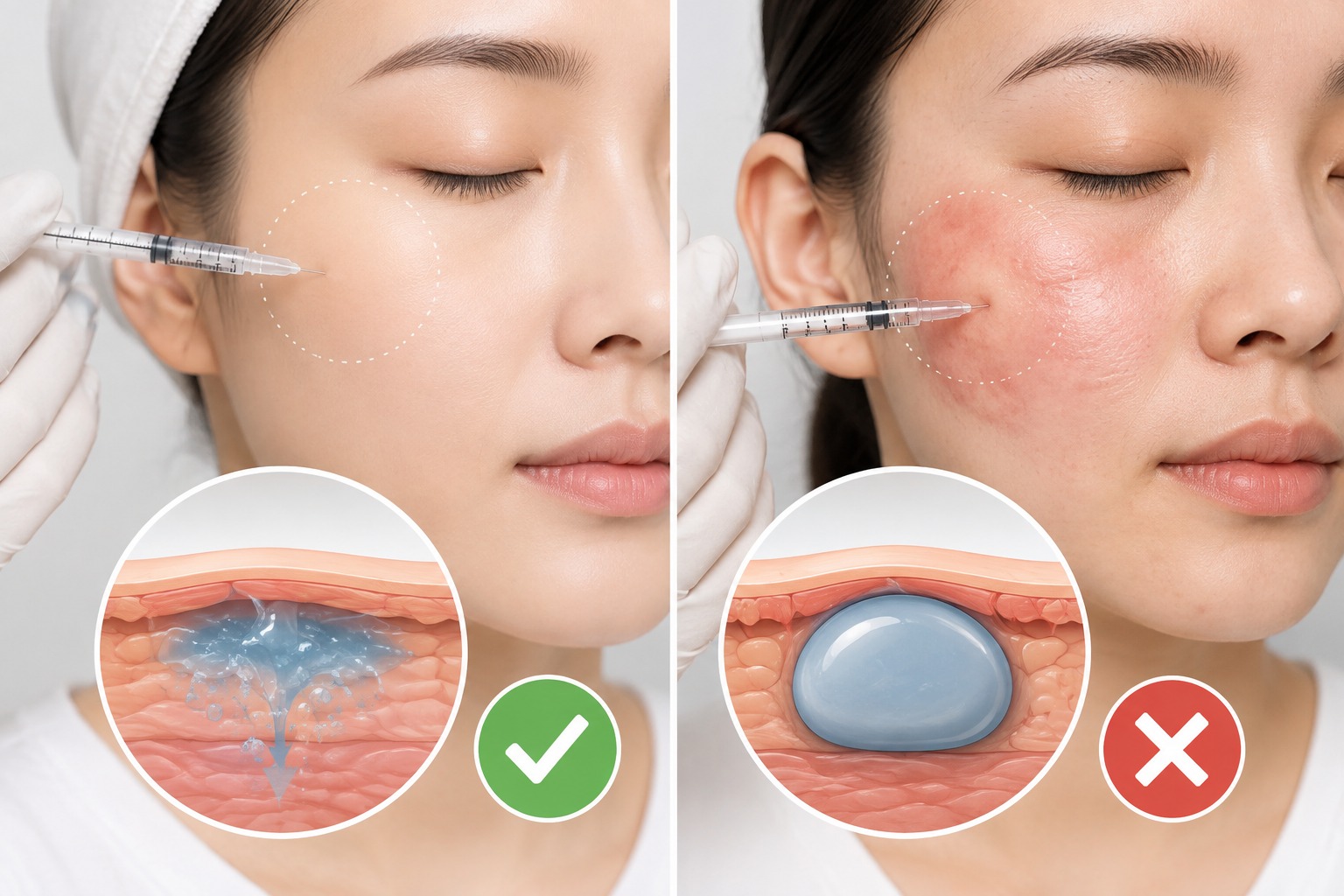
If the injected material is HA filler, the use of the enzyme hyaluronidase causes the filler to gradually dissolve over a period of 24 to 48 hours; the treated area softens and returns to a state nearly identical to its original condition.
Conversely, if silicone was injected, the mass remains unchanged even after repeated attempts to dissolve it. This occurs because silicone does not react with the specialized enzyme. For this reason, doctors often prescribe a dissolving injection when it is necessary to precisely identify the substance present beneath the skin.
2. Sensation upon palpation of the injection site
Manual palpation also helps assess the characteristics of the filler material. With genuine HA fillers, the treated area feels soft, retains natural elasticity, and remains stable in the sculpted position; the filler does not shift or deform upon light touch.
In contrast, silicone tends to feel abnormally hard. Over time, small granules or lumps may be palpable beneath the skin. Because it does not bond with the surrounding tissue, silicone tends to migrate due to gravity, leading to a crooked nasal bridge, a sagging chin, or deformity of the treated area.
3. Observe changes over time
Fillers and silicone behave very differently after being introduced into the body.
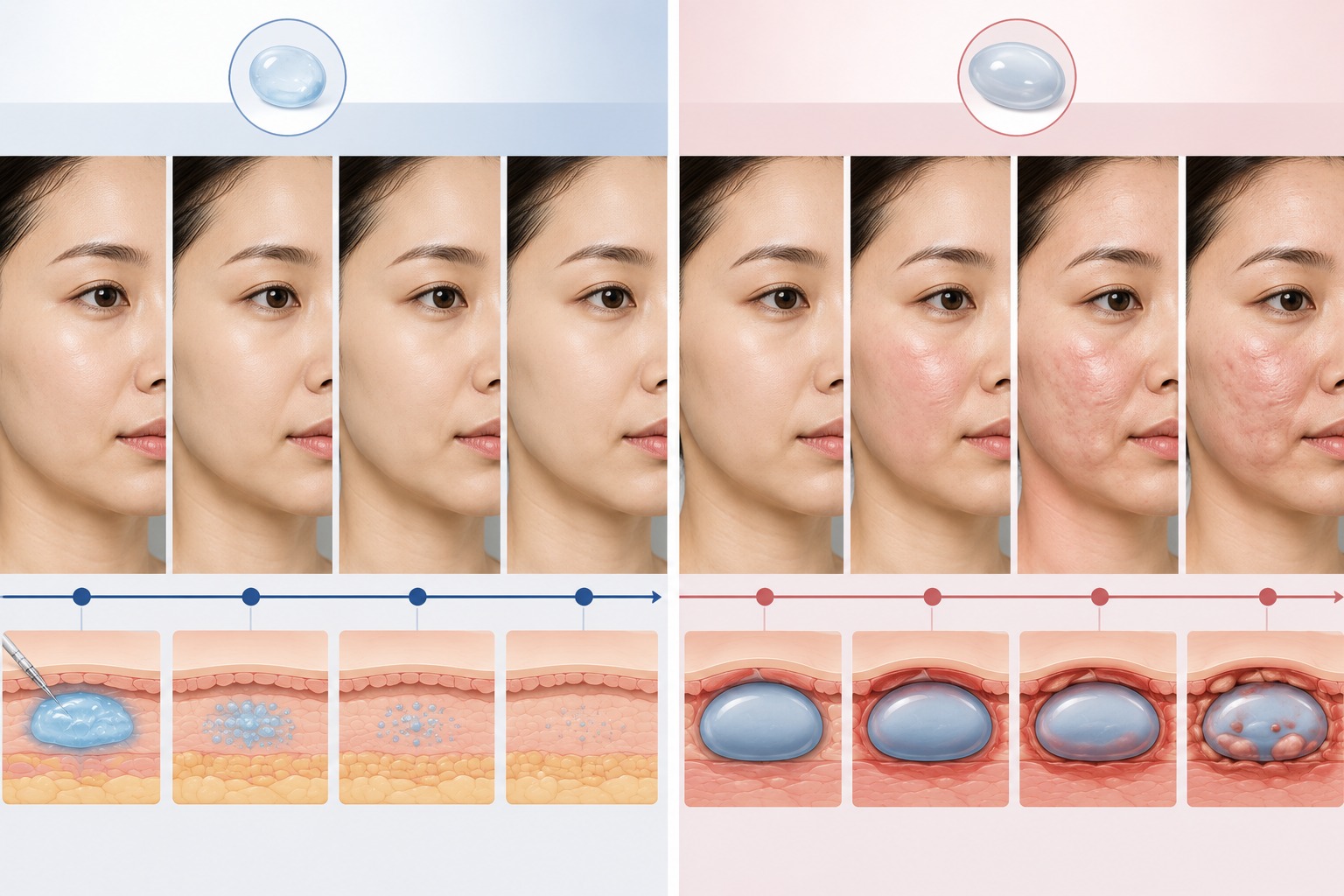
With HA fillers, mild swelling and bruising last only for the first few days. Afterward, the treated area stabilizes, takes on a pleasing shape, and causes minimal discomfort.
In contrast, silicone often “deceives” users by initially providing an attractive appearance for the first few months. However, persistent inflammation eventually flares up. The treated area frequently becomes red and feels tight or tender whenever the weather changes or the body is fatigued. Over time, the skin thins, revealing purplish veins or developing a rough, “orange-peel” texture.
4. Diagnostic images on the ultrasound machine
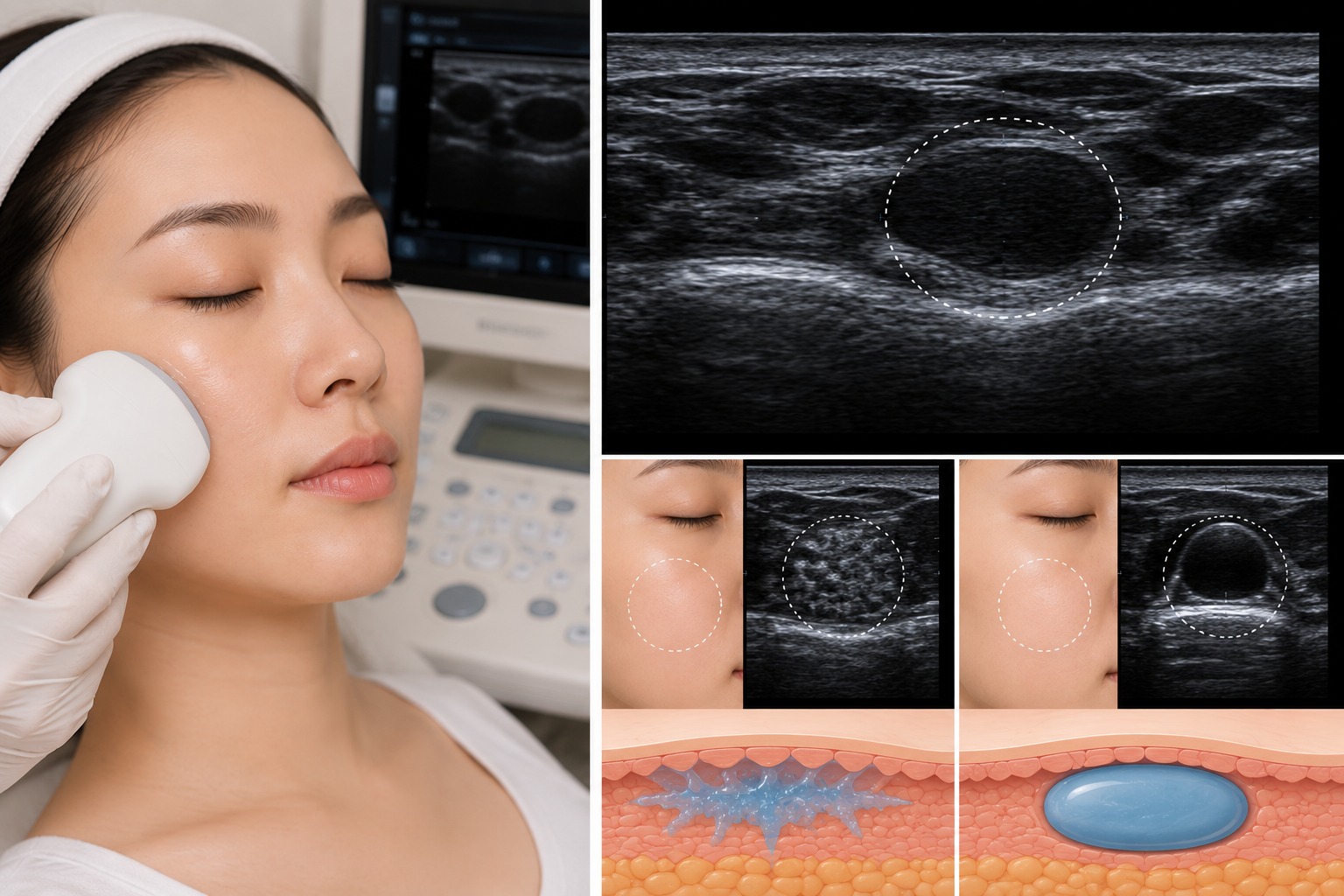
Soft-tissue ultrasound is an effective diagnostic aid that allows doctors to accurately visualize dermal fillers beneath the skin.
On ultrasound imaging, HA fillers typically appear as homogeneous masses located within the intended tissue layer.
In contrast, liquid silicone produces a characteristic appearance known as the “snowstorm artifact,” caused by silicone particles scattering the ultrasound waves. This enables doctors to assess the extent of the material’s spread and fibrosis, as well as the degree of silicone invasion into surrounding tissues.
5. Check packaging, pricing, and the implementation process
What should you do if you don’t know whether you received dermal fillers or silicone injections?
Consequences of accidental silicone injection
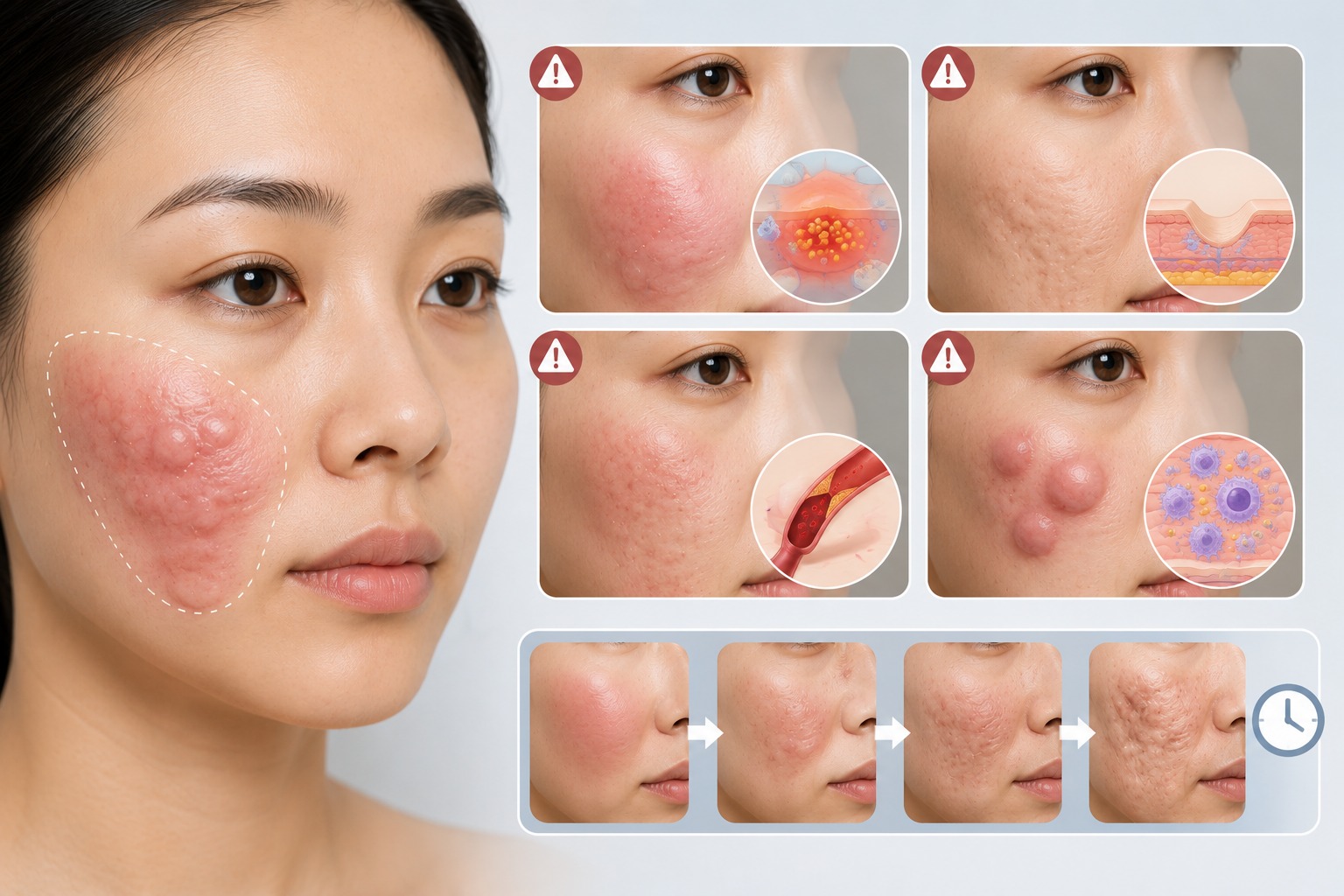
Liquid silicone not only compromises aesthetics but also carries the risk of serious complications.
Over time, the substance can cause tissue fibrosis, granuloma formation, chronic inflammation, persistent infection, or compression of blood vessels. In severe cases, the silicone may migrate to other areas of the face, further complicating treatment.
A major concern is that removing silicone is not as simple as dissolving dermal fillers; doctors often must perform surgical excision in stages to minimize damage to healthy tissue.
What should you do if you suspect you have been injected with silicone?
If the injection site develops hardening, lumps, persistent pain, recurring redness, or signs of migration, do not attempt to dissolve the filler or massage the area yourself. Instead, visit a reputable aesthetic clinic to have a doctor examine the site, perform a soft-tissue ultrasound, and accurately identify the type of filler used, in order to determine a safe course of treatment.

Frequently Asked Questions: How to Distinguish Between Dermal Fillers and Silicone
Can fillers and silicone be distinguished with the naked eye?
Not entirely. They can only be identified through clinical signs, reactions to dissolving agents, and diagnostic methods such as soft-tissue ultrasound.
Can silicone be dissolved?
No. Silicone does not react with the enzyme hyaluronidase, so it cannot be dissolved like HA fillers.
How long does it take for silicone complications to appear?
In some cases, complications appear after a few weeks, while in others, they may only be detected months or even years after the injection.
Do genuine fillers last forever?
No. HA fillers are gradually broken down by the body over time; they typically last between 6 and 18 months, depending on the specific product and the individual’s physiology.
We hope this article has helped you distinguish between fillers and silicone so you can make safe choices regarding cosmetic procedures. If you have concerns about a filler you have received or notice any unusual symptoms, please contact HBIO Clinic to consult directly with a specialist who can provide a proper assessment and recommend a safe, appropriate course of action.