Tiếng Việt
With over a decade of experience treating acne for thousands of clients, HBIO Clinic has observed numerous cases of persistent dark spots and scarring caused simply by the improper handling of ruptured pustules. Many people remain careless, choosing to squeeze the pimple themselves or apply unsuitable products, which only exacerbates the inflammation. In this article, HBIO Clinic shares detailed advice on how to manage a ruptured pustule to promote rapid healing and minimize complications.
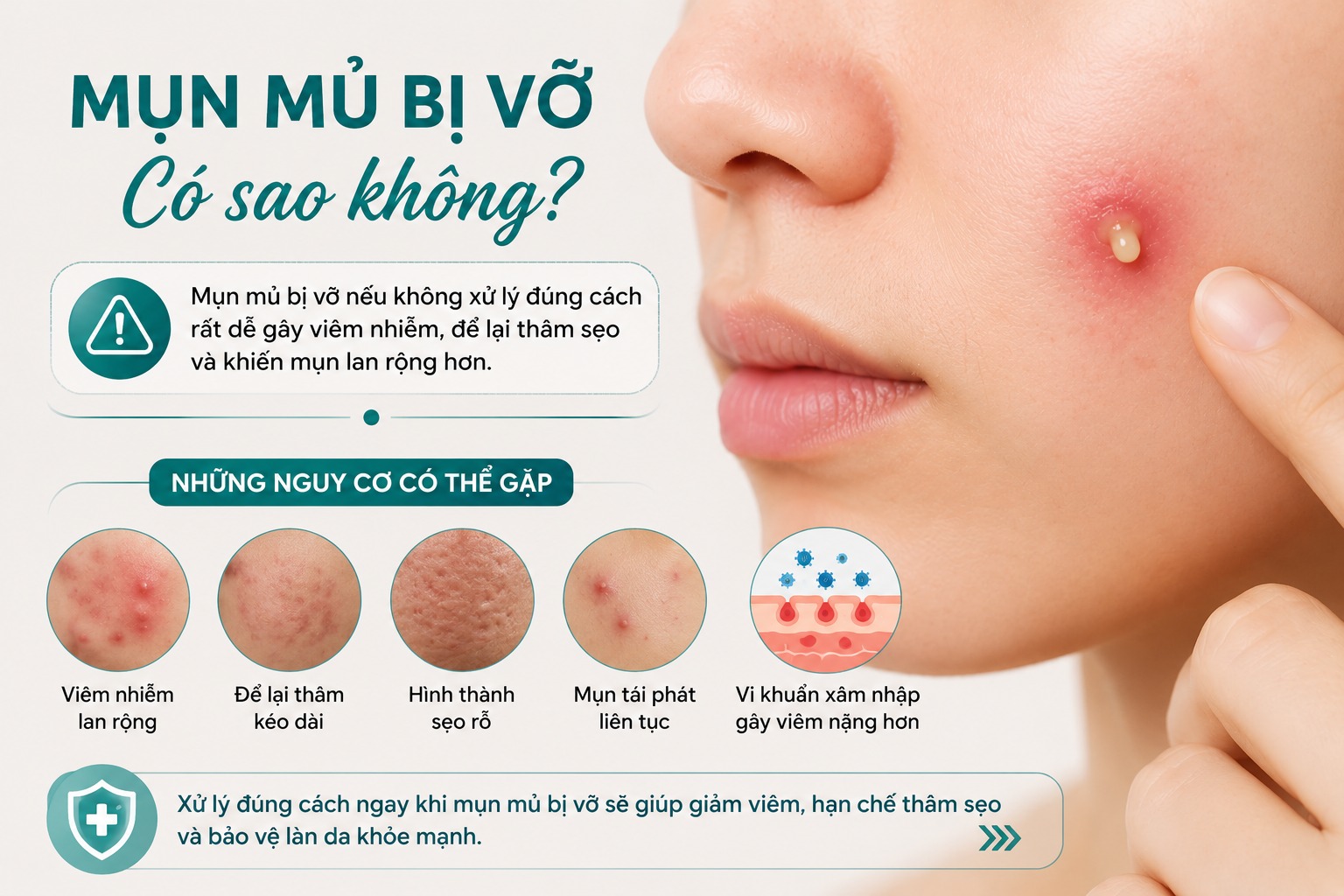
Is a ruptured pustule a problem?
A pustule is a type of inflammatory acne containing pus. When it ruptures—whether spontaneously or due to external pressure—the affected area effectively becomes an “open wound” that is highly susceptible to infection.
Improper handling of a ruptured pustule can lead to several issues, such as:
- Inflammation spreading to the surrounding skin
- Persistent red or dark spots
- Formation of pitted scars
- Skin irritation and burning sensations
- Recurrent acne outbreaks
Medically-sound home care for a ruptured pustule
To minimize inflammation and prevent dark spots or scarring, you should properly treat a ruptured pustule by following the steps below.
Step 1: Clean your hands before touching the skin
Before treating the pimple, wash your hands thoroughly with soap or an antiseptic solution. Hands harbor significant amounts of bacteria and excess oil; touching the open wound directly significantly increases the risk of infection.
This is a simple yet crucial step in managing a ruptured pustule.
Step 2: Blot away pus and fluid
Using two clean cotton swabs, gently press the edges of the pimple to expel the pus and fluid.
Apply only gentle pressure; if you feel a hard core remaining beneath the surface or experience sharp pain, stop immediately. Attempting to force it out will only cause deeper damage to the skin tissue.
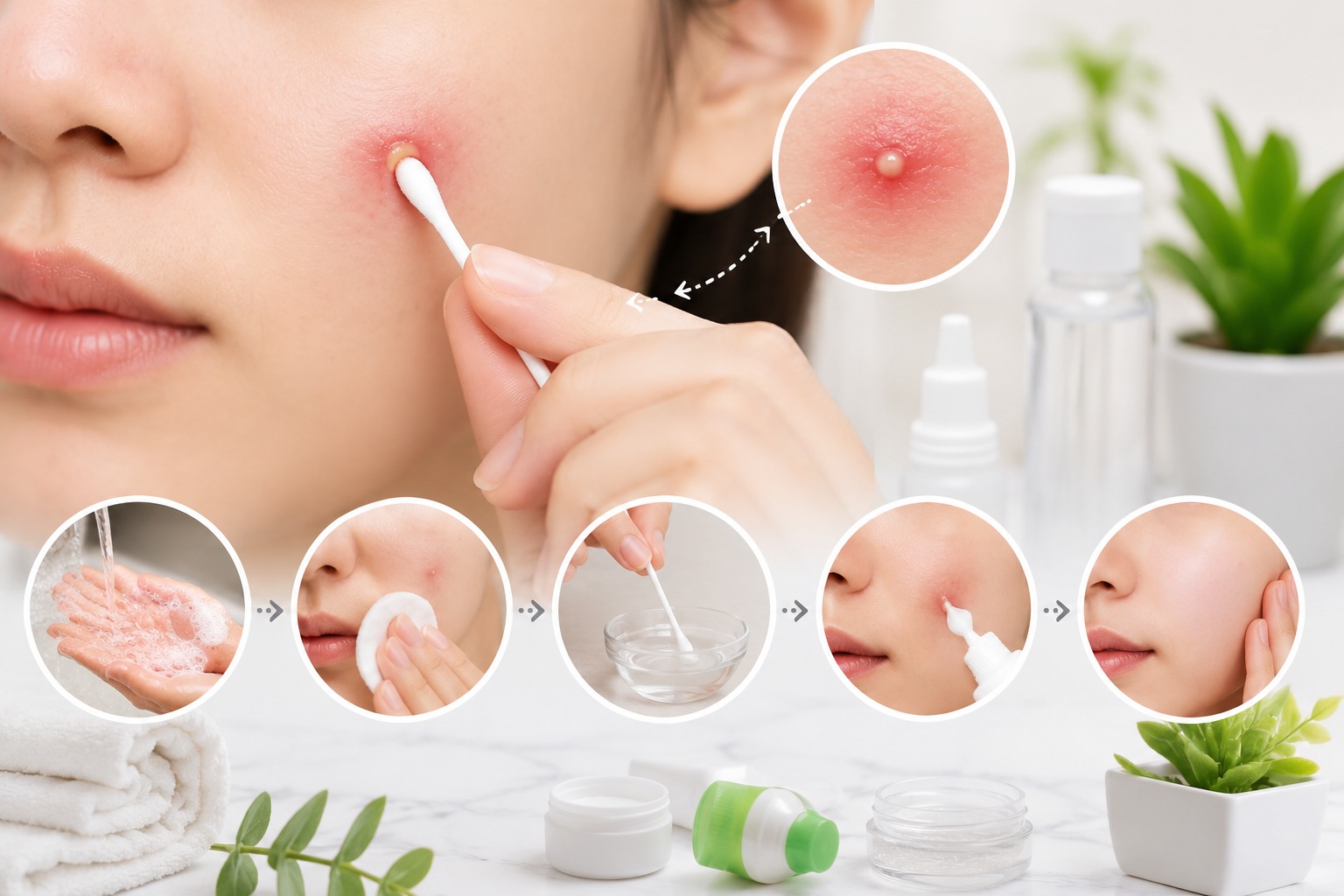
Step 3: Disinfect the open wound
After wiping away any pus, use a cotton pad or clean gauze soaked in 0.9% normal saline or diluted Betadine solution to gently dab the area where the pimple ruptured.
This step cleans the skin surface, inhibits bacterial entry, and reduces the risk of severe inflammation.
Step 4: Apply anti-inflammatory and restorative products
Once the area is dry, apply a thin layer of antibacterial ointment (such as Fucidin or Neosporin) or a serum containing Zinc, Centella (Gotu Kola), or Vitamin B5.
These ingredients help soothe the skin, reduce redness, and accelerate new cell regeneration.\
Step 5: Spot-treat with suitable active ingredients
To help reduce inflammation and prevent recurrence, apply a small amount of a product containing Benzoyl Peroxide, Azelaic Acid, or low-concentration Tea Tree Oil.
Use only a thin layer; applying too much product does not speed up healing and can actually cause skin peeling or irritation.
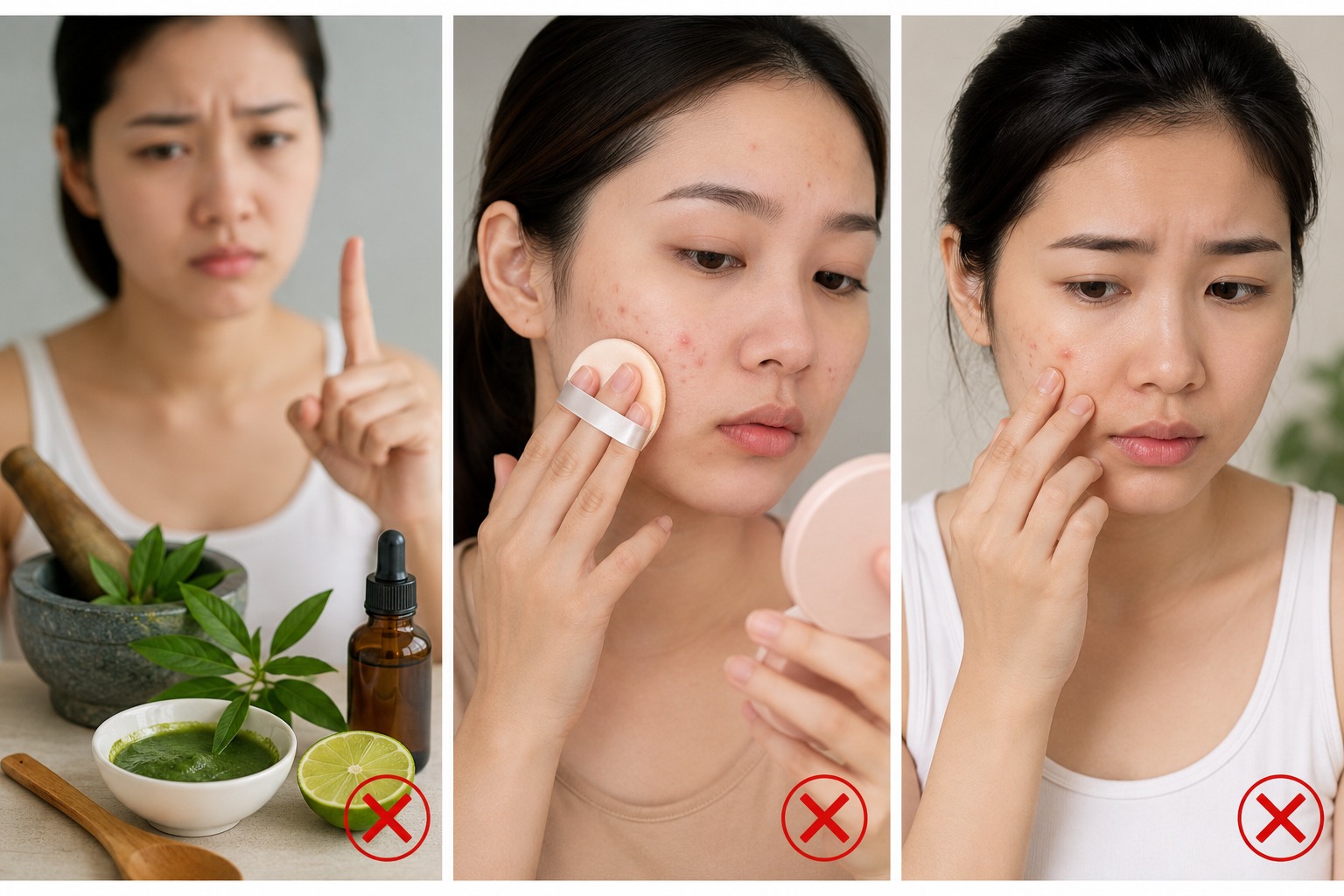
Mistakes to avoid when dealing with a ruptured pimple
During client treatments, HBIO Clinic has encountered many cases of severe skin infection caused by the following harmful habits:
- Avoid using random folk remedies: Toothpaste, lemon, or garlic can cause burning sensations and worsen dark spots.
- Applying makeup over an unhealed pimple: Foundation and powder can seep into open pores, causing clogging and creating a new breeding ground for bacteria beneath the skin.
- Habitually touching your face: Our hands harbor millions of bacteria. Every time you touch or pick at the scab, you risk worsening the wound.
Post-rupture care for pustular acne
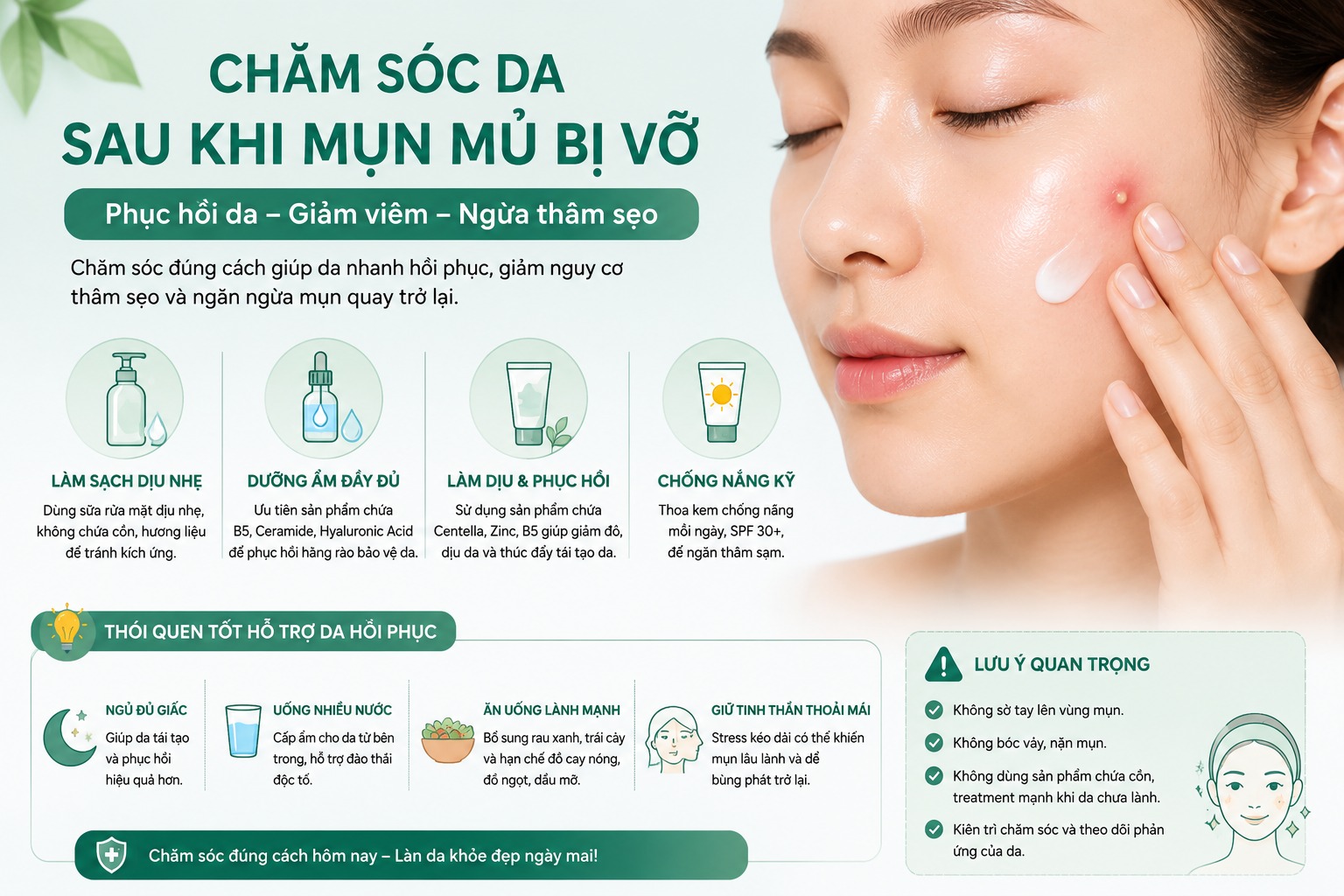
After taking initial first-aid measures, your skincare routine over the next 3–5 days will determine whether or not scarring occurs.
Simplify your skincare routine
For the first few days, temporarily pause the use of potent active treatments—such as BHA, AHA, or Retinol—on the area where the acne has ruptured. Focus on three core steps: gentle cleansing (non-foaming cleanser with a pH of 5.5) ➔ restorative hydration (B5/Ceramide) ➔ sun protection.
Internal Nutritional Support
To promote rapid healing and natural collagen production, you should:
- Drink at least 2 liters of water daily.
- Consume foods rich in Vitamin C (oranges, guavas, kiwis) and Zinc (seafood, nuts/seeds).
- Minimize the intake of spicy, sugary, and dairy foods, as these can stimulate sebaceous glands and trigger acne flare-ups.
Managing a ruptured pustule is not overly complicated; the real challenge lies in curbing the urge to tamper with it and ensuring proper medical hygiene practices are followed.
When Should You Visit a Clinic for Inflammatory Pustules?
Attempting to pop or treat acne at home can easily worsen inflammation. If you notice widespread flare-ups, or if ruptured pimples remain swollen and continue to ooze pus, it is time to visit a specialist clinic immediately. Delaying treatment increases the risk of the condition spreading, becoming infected, and leaving behind permanent dark spots or scars.
Let HBIO Clinic help rescue your skin. We take pride in our team of experienced dermatologists and our medical-grade, high-tech equipment. Clients receive a complimentary consultation and skin analysis, allowing our doctors to design a safe, precise treatment plan that addresses the root cause.
HBIO Clinic is committed to restoring your skin to a smooth, firm, and healthy state—completely free of dark spots and scars. Sign up today for a free consultation and regain your radiant confidence!
Contact Information:
- Phone / Zalo: 0947.697.795
- Location: 24 Truong Han Sieu, Tran Hung Dao, Hoan Kiem, Hanoi