Tiếng Việt

Acne on the temples not only affects your appearance but can also lead to dark spots and scarring if not managed correctly. So, what causes acne to develop in this area? How should you care for your skin, and what are the most appropriate, safe, and effective treatment options? Find out in the following guide from HBIO Clinic.
What are pimples on the temples? Are they dangerous?
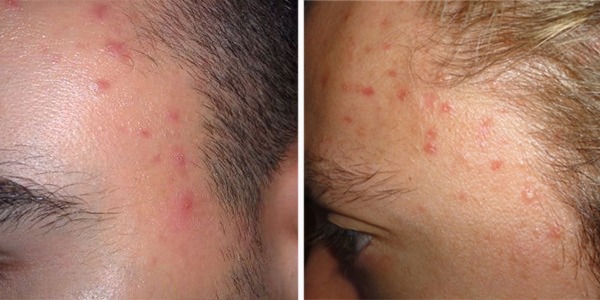
Acne on the temples refers to skin lesions concentrated near the hairline and on both sides of the forehead. While not life-threatening, this condition is highly prone to leaving behind persistent dark spots and pitted scars, as the skin in this area is thin and sensitive.
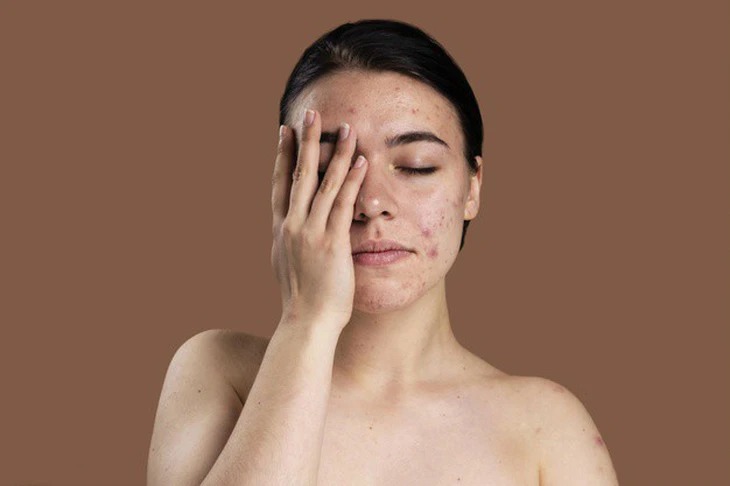
Signs to identify common types of acne on the temples
Accurately identifying the type of acne on your skin will help you choose a safe and highly effective treatment regimen. Below are the most common clinical manifestations seen in this area:
- Hidden acne (comedones) and blackheads: The skin surface feels uneven, characterized by numerous tiny bumps lodged deep within the pores; these are typically painless.
- Inflammatory acne and pustules: These appear as red, swollen bumps—often found on the temples—with a white or yellow pus-filled center; they may cause a stinging sensation when touched.
- Cystic acne and nodules: These lesions penetrate deep into the dermis, forming large, inflamed masses filled with pus; they carry a high risk of leaving pitted scars.
The leading cause of acne on the temples
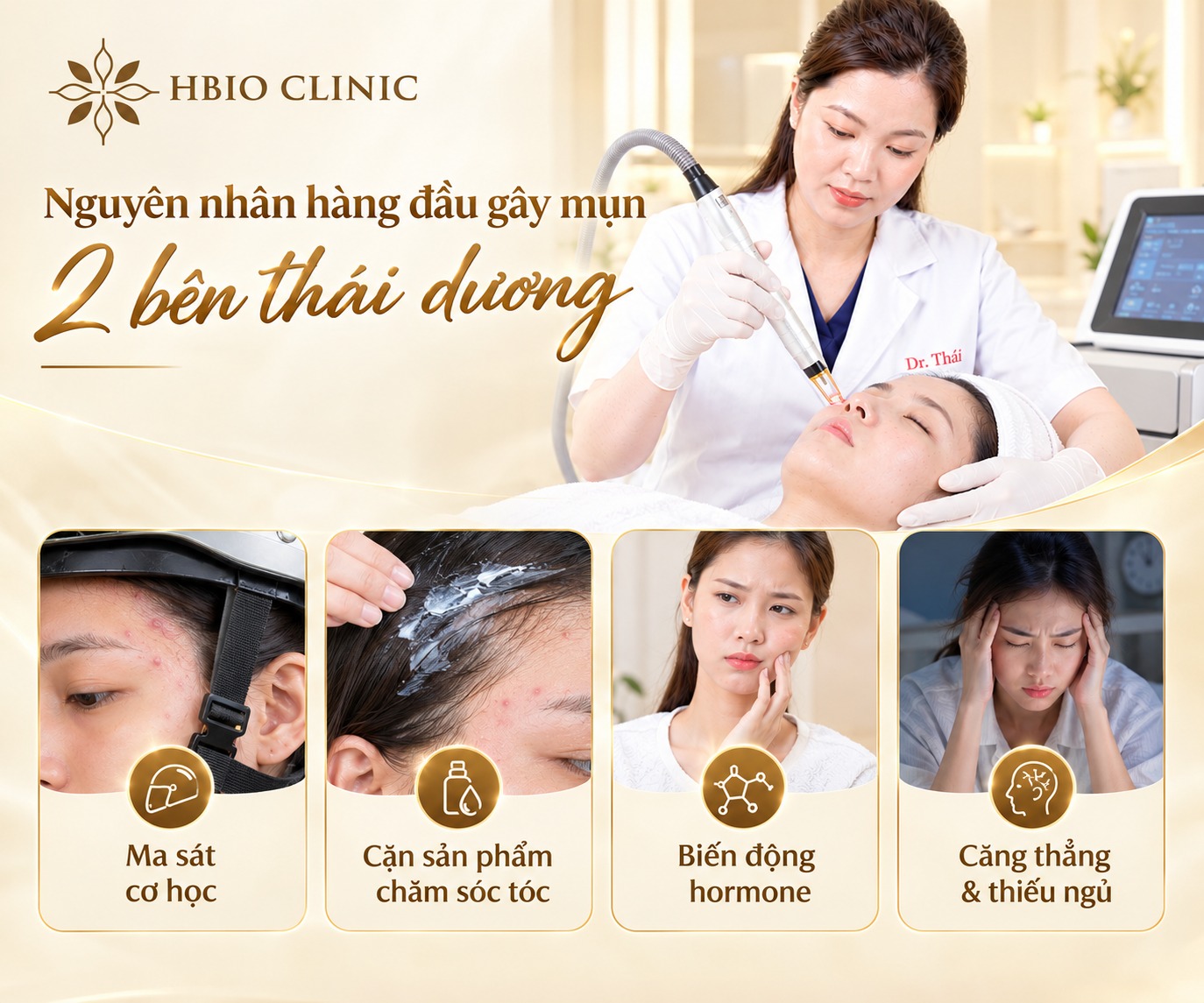
Acne breakouts in the temple area often stem from a combination of daily lifestyle habits and internal physiological changes. Identifying the root cause of acne on your temples can help prevent future recurrences:
- Chronic mechanical friction: Helmet straps, eyeglass frames, or the habit of pressing your face against a pillow can facilitate the entry of bacteria, leading to inflammation.
- Hair care product residue: Shampoos, styling waxes, or hairsprays that come into contact with the skin near the hairline can severely clog pores.
- Androgen hormone fluctuations: Hormonal shifts—such as those occurring during pregnancy, the menstrual cycle, or puberty—can stimulate sebaceous glands to produce excess oil.
- Prolonged stress and sleep deprivation: Chronic stress elevates cortisol levels, which causes sebaceous glands to become overactive and intensifies inflammatory responses in the skin.
Medically-sound and effective treatment solutions for acne on the temples
Choosing the right medical treatment regimen will help you quickly control inflammation and restore a smooth complexion. Below are the most highly regarded methods for treating acne on the temples, as recommended by dermatologists today.
Use of over-the-counter (OTC) topical agents
Over-the-counter (OTC) active ingredients are a suitable choice for mild to moderate acne, helping to unclog pores and rapidly reduce inflammation. Topical products typically range in price from 200,000 to 800,000 VND, depending on the brand. Common active ingredients include:
- Salicylic Acid (BHA): Penetrates deep into hair follicles to dissolve sebum and clear away accumulated dead skin cells.
- Benzoyl Peroxide: Releases oxygen to eliminate acne-causing bacteria, helps draw out impurities, and dries out inflammatory acne lesions.
- Niacinamide: Regulates excess oil production, soothes red, swollen skin, and strengthens the skin’s protective barrier.
Pros: Affordable, easy to use at home, and convenient for daily skincare routines.
Cons: Effects may be gradual; improper dosage can lead to skin dryness or mild stinging.

Prescription medication regimen from a doctor
For cases of severe inflammatory acne, cystic acne, or acne that does not respond to over-the-counter (OTC) products, a dermatologist will prescribe specialized, prescription-strength medications. This treatment regimen typically combines topical retinoids (such as Adapalene or Tretinoin)—which regulate the skin’s keratinization process—with topical or oral antibiotics to eliminate deep-seated bacterial infections.
The cost for a medically prescribed treatment plan generally ranges from 500,000 to 1,500,000 VND per month.
- Advantages: Targets the root cause of the condition, offering rapid results for severe acne.
- Disadvantages: Requires close medical supervision to prevent side effects such as skin irritation, peeling, or the development of antibiotic resistance.
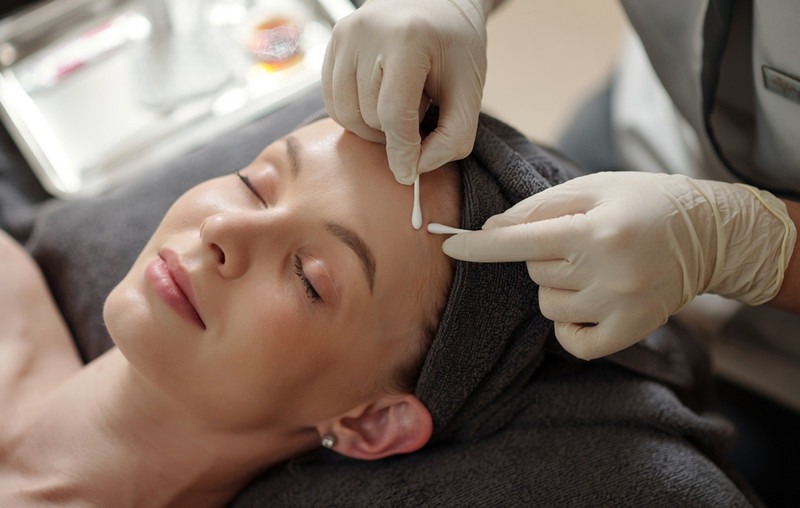
Dermatological spa treatments
Intensive treatment protocols at HBIO Clinic help accelerate skin recovery and prevent the formation of dark acne scars. The cost per session ranges from 400,000 to 2,500,000 VND, depending on the specific technique applied:
- Medical-grade chemical peels: Utilize bio-acids to remove dull, dead skin layers, provide deep cleansing, and help draw out acne impurities.
- Sterile acne extraction: Professional, hygienic removal of mature acne lesions, ensuring minimal trauma to surrounding tissue.
- Light-based therapy (IPL/Laser): Effectively eliminates acne-causing bacteria, reduces inflammation, and fades dark spots.
Advantages: Delivers visible results after each session and significantly shortens the skin recovery period.
Disadvantages: Involves a higher cost and requires choosing a reputable clinic to ensure absolute safety.
Reliable acne treatment for the temple area at HBIO Clinic
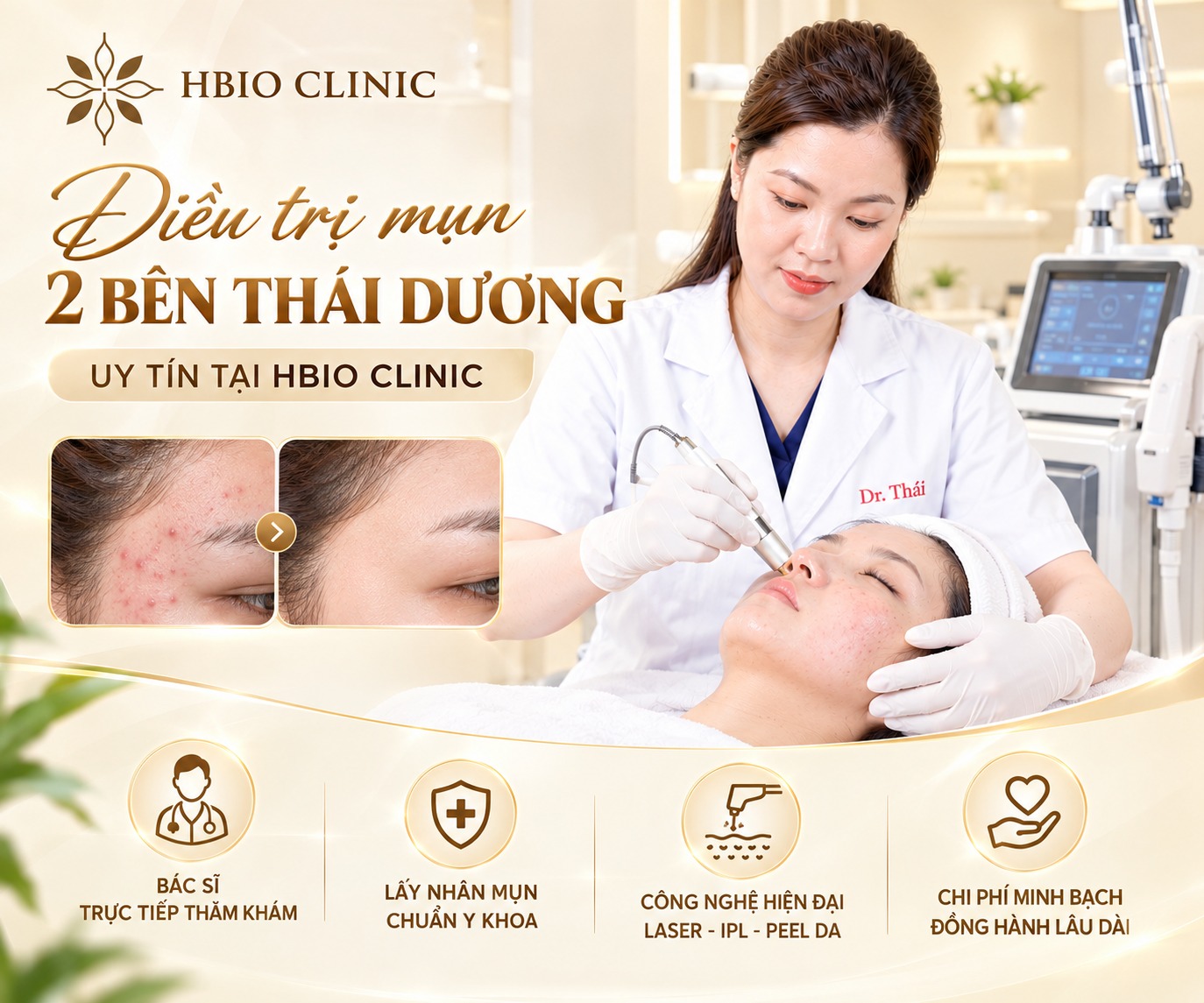
HBIO Clinic takes pride in being a premier destination for medical-grade skincare, offering personalized treatment plans designed to help you quickly restore a clear, smooth, and acne-free complexion. By combining high-level expertise with cutting-edge technology, we ensure optimal aesthetic results.
We guarantee:
- Direct consultations and skin analysis by a dermatologist, who will develop a tailored treatment plan specifically for you.
- A medical-standard acne extraction process that is strictly sterile, painless, and prevents pitted scarring.
- The use of advanced, authentic, and safe technologies—including Laser, IPL, and chemical peels—suitable for all skin types.
- Transparent, clearly listed pricing, accompanied by dedicated, attentive support throughout your entire treatment journey.
Frequently asked questions about acne on the temples
Understanding common concerns will help you develop a safe and effective skincare routine. Below, experts provide detailed answers to frequently asked questions:
Can acne on the temples go away on its own?
Acne may resolve on its own only if it is caused by temporary factors, such as sweat or dirt. If the breakouts are triggered by hormonal imbalances or deep-seated congestion, professional medical intervention is necessary to prevent skin damage.
Should you pop pimples on your temples at home?
You should absolutely avoid popping pimples yourself, as the temple area contains a high concentration of nerves and small blood vessels. Improper extraction can cause inflammation to spread, lead to infections, and result in permanent pitted scarring that is very difficult to treat.
Can greasy bangs worsen acne?
Yes. Bangs easily collect dirt, sweat, and residue from styling products. As they constantly rub against the temple area, these substances can clog pores and trigger more intense inflammatory reactions.
Is acne on the temples caused by an “overheated” liver?
Not necessarily. In modern medicine, the liver plays only an indirect role—primarily through the metabolism of hormones and the excretion of toxins. Acne breakouts are mainly driven by excess sebum production, the accumulation of dead skin cells, and bacterial infection within the hair follicles.

Which active ingredients should you use for mild acne on the temples?
For non-inflammatory (under-the-skin) acne, prioritize using BHA to deeply cleanse excess oil from your pores. If you have inflamed or swollen pimples, incorporate Benzoyl Peroxide to eliminate bacteria, along with Niacinamide to help soothe the skin quickly.
This covers all the detailed information regarding the causes, signs, and safe solutions for addressing acne on the temples. Take the initiative to establish a scientifically sound skincare routine so you can soon regain clear, acne-free skin and boost your confidence.