Tiếng Việt
Postpartum melasma is a common concern for many new mothers as their skin becomes dull and lifeless after pregnancy and childbirth. Not only does it affect aesthetics, but melasma also causes many mothers to lose confidence in their daily lives. However, if you understand the causes and apply appropriate postpartum melasma treatment methods, your skin can be safely and sustainably improved. Below, HBIO Clinic will share important experiences that new mothers should know to effectively control and fade melasma.
Common Causes of Postpartum Melasma
Below are some causes of postpartum melasma in some mothers, even though this condition did not occur before:
Hormonal Changes – The Main Cause of Postpartum Melasma
During pregnancy and after childbirth, the hormones estrogen and progesterone increase, causing melanin production to increase, leading to postpartum melasma. Although some cases of melasma may fade over time, most require appropriate treatment for postpartum melasma to see significant improvement.
Skin aging and weakened immunity after childbirth
Women who give birth after 30 are at a higher risk of melasma because their skin begins to age, loses elasticity, and is more prone to pigment accumulation. At the same time, the mother’s body is often weakened after childbirth, and her immune system is reduced, making her skin more vulnerable and leading to persistent melasma if not treated properly.
Stress, lack of sleep, and prolonged stress
Caring for a young child causes many mothers to experience fatigue, stress, and hormonal imbalances. Prolonged stress not only affects health but also makes postpartum melasma darker and harder to improve.

Sun exposure worsens postpartum melasma
Postpartum skin is very sensitive; without adequate sun protection, UV rays will stimulate melanin production, causing melasma to spread and darken. This is why sun protection is always a crucial step in treating postpartum melasma.
Genetic factors and lack of time for skincare
If there is a family history of melasma, the risk of postpartum mothers developing it is higher. Additionally, a lack of time for skincare, neglecting sun protection and moisturizing, also makes postpartum melasma harder to fade over time.
Can postpartum melasma disappear on its own?
According to experts, postpartum melasma can gradually fade and improve on its own after about 6 months, when the mother’s hormones stabilize. During this period, if the skin is properly cared for, many mild melasma spots can significantly reduce without intensive intervention.

However, not all cases of melasma resolve on their own. For women with sensitive skin, those who give birth after age 30, or those who are frequently exposed to sunlight, postpartum melasma can persist and become darker over time. Therefore, applying safe melasma treatments for postpartum women, combined with skin protection and scientific skincare, is crucial for effectively controlling and improving melasma.
Postpartum Melasma Treatment Technology at HBIO Clinic
For persistent and stubborn postpartum melasma, applying advanced technology that targets the root cause of the melasma is the most effective solution. At HBIO Clinic, melasma treatment regimens for postpartum women are tailored to skin type, melasma severity, and hormonal status, with laser melasma treatment and mesotherapy (meso) being prominent options.
Postpartum Melasma Treatment with Laser Technology
The laser melasma treatment technology at HBIO Clinic uses specialized wavelengths to directly target melanin pigments under the skin. Laser energy helps break down melanin into tiny particles, which are then naturally eliminated through the body’s metabolic processes. This method is particularly effective for melasma, deep-seated melasma, and mixed melasma after childbirth.
The advantages of laser melasma treatment are its rapid effectiveness, targeted action, and minimal damage to surrounding skin. The treatment is closely monitored by experts, reducing the risk of hyperpigmentation and is suitable for postpartum women once their skin has stabilized.
The cost of laser melasma treatment after childbirth usually varies depending on the severity of the melasma (melasma, deep-seated melasma, or mixed melasma), the area being treated, and the number of sessions required. Typically, a laser melasma treatment will require 3-6 sessions to achieve noticeable results, with an average cost of 5,000,000 – 15,000,000 VND per treatment.

Mesotherapy (Meso) – Postpartum Skin Restoration and Brightening
Meso is a method that directly delivers specialized active ingredients such as vitamins, minerals, antioxidants, and skin-brightening agents into the dermis. For postpartum women, meso not only helps fade melasma but also helps restore weak, lifeless skin caused by hormonal imbalances.
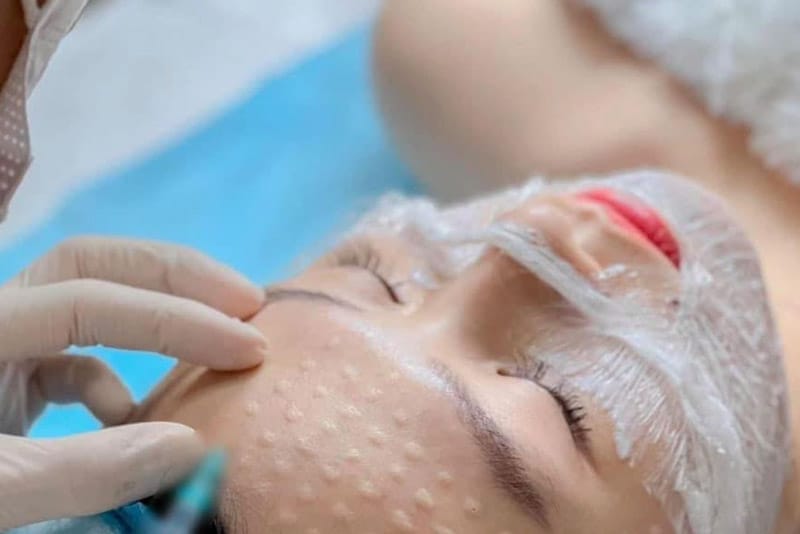
Mesotherapy has the advantage of being minimally invasive, helping to strengthen the skin from within, increasing its ability to recover, and preventing the recurrence of melasma. At HBIO Clinic, mesotherapy is often combined with other treatments for postpartum melasma to maintain long-term effectiveness and improve overall skin quality.
Regarding cost, mesotherapy is generally more affordable than laser treatment, as it focuses on nourishing, restoring, and brightening the skin from within. The price for mesotherapy for postpartum melasma usually ranges from 2,000,000 to 6,000,000 VND per session, depending on the type of serum used and the individual’s skin condition.
By combining laser treatment to address melasma and mesotherapy for skin restoration and nourishment, HBIO Clinic offers a safe, personalized, and effective solution for postpartum melasma, suitable for women seeking lasting results. If you’re worried about persistent, stubborn postpartum melasma and unsure which method is right for you, don’t hesitate to let HBIO Clinic be your partner. Our team of experts will directly examine your skin, assess the severity of the melasma, and advise on a personalized treatment plan, ensuring safety for your postpartum skin and long-lasting results.
Treating postpartum melasma is a process that requires patience and choosing a method suitable for the sensitive skin of new mothers. Combining proper skincare, sun protection, and intensive treatment when necessary will help the melasma fade over time. Hopefully, the experiences in treating postpartum melasma in this article will help new mothers feel more confident on their journey to regain bright, even-toned, and radiant skin after childbirth.