Tiếng Việt
Deep smile lines can make a face look older than its age, so filler injections are a popular cosmetic procedure chosen by many to regain a youthful appearance. However, this technique requires a very high level of skill from the doctor. If performed at low-quality facilities, filler leakage into the smile lines is entirely possible. Let’s explore how to fix this with HBIO Clinic below.
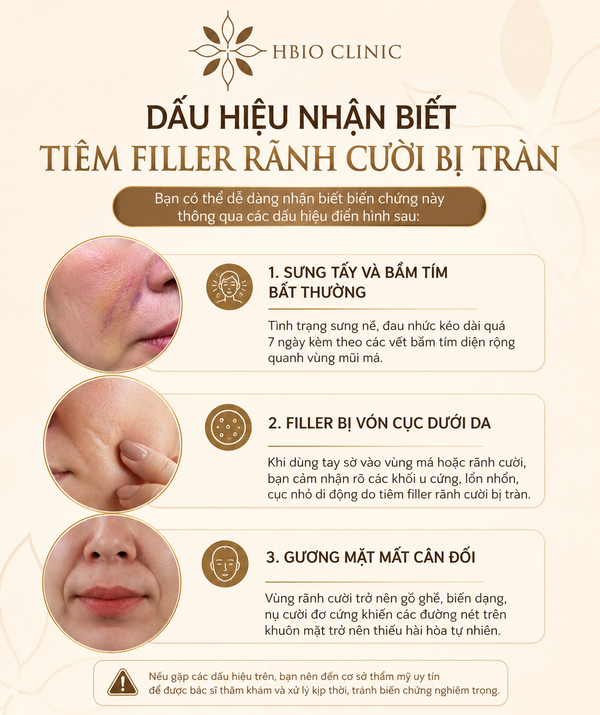
Signs that filler has spilled over after smile line injection
You can easily identify this complication through the following typical signs:
- Unusual swelling and bruising: Swelling and pain lasting more than 7 days, accompanied by widespread bruising around the nose and cheeks.
- Filter clumping under the skin: When touching the cheek or nasolabial folds, you can clearly feel hard, lumpy, or small, movable lumps due to filler spreading under the nasolabial folds.
- Facial asymmetry: The nasolabial folds become uneven and deformed, resulting in a stiff smile that makes the facial features appear unnatural and unbalanced.
Causes of filler leakage after smile line injections
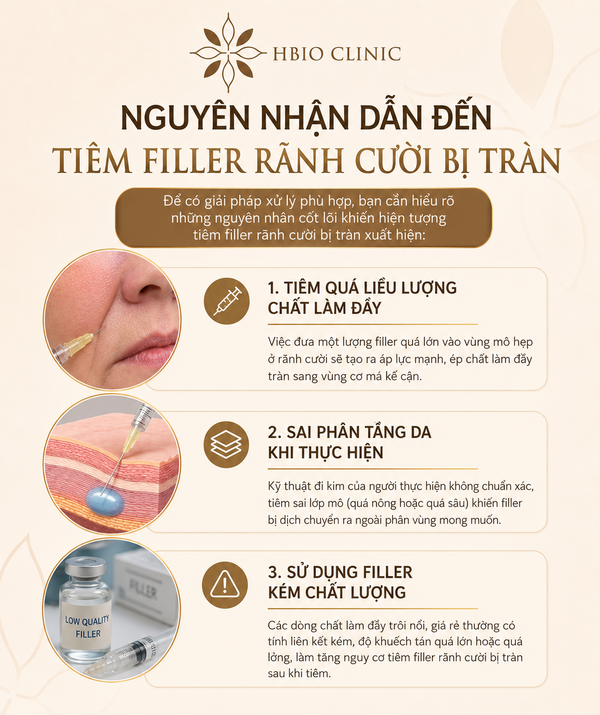
To find the right solution, you need to understand the core reasons why filler injections in smile lines can cause leakage:
- Overdosing on filler: Injecting too much filler into the narrow tissue area of the smile lines creates strong pressure, forcing the filler to leak into the adjacent cheek muscles.
- Incorrect skin stratification during the procedure: Inaccurate needle technique, injecting into the wrong tissue layer (too shallow or too deep) causes the filler to shift outside the desired area.
- Using low-quality filler: Cheap, low-quality fillers often have poor cohesion, excessive diffusion, or are too liquid, increasing the risk of filler leakage after injection.
How to fix filler spillage in smile lines
When you notice signs of filler leakage in the smile lines, absolutely do not attempt to massage or press the area yourself at home, as this can cause the filler to spread to other muscle areas.
Please follow these medical instructions:
- See a specialist immediately: You need a prompt clinical examination to assess the extent of filler leakage and check the surrounding blood vessels.
- Inject filler dissolving medication promptly: The doctor will use the enzyme Hyaluronidase to completely break down the Hyaluronic Acid bonds of the leaked filler, helping the skin quickly return to its original state.
- Monitor for dangerous complications: If the skin shows signs of discoloration (pale white, bluish-purple) or swelling and inflammation accompanied by fever, you need to go to a medical facility immediately as these are signs of vascular occlusion or hematoma.
Advantages of treating cosmetic surgery complications at HBIO Clinic
Filler leakage after smile line injections is not uncommon, but if not handled by qualified professionals, the consequences can include tissue fibrosis or necrotic infection. Below are some great advantages of having cosmetic complications treated at HBIO Clinic.

Treated directly by a long-time dermatologist
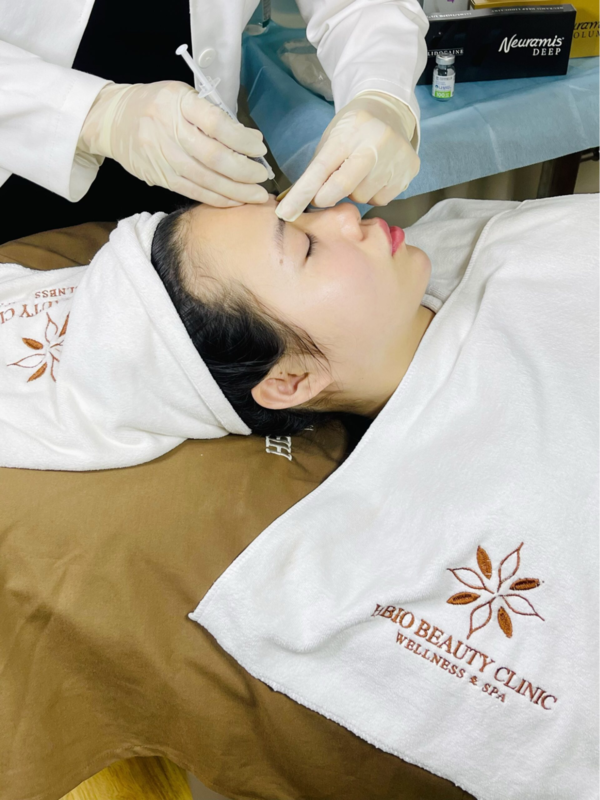
The entire filler dissolution procedure is performed by a team of specialist doctors with 15 years of experience in facial surgery, ensuring precise needle placement into the exact layer of excess filler without affecting the surrounding healthy tissue.
Use genuine detoxification enzymes
We are committed to using officially imported, high-purity dissolving agents to rapidly break down faulty filler without causing allergies or eroding your skin’s protective barrier.
Identifying filler implants using AI skin analysis technology
Before the procedure, the doctor will scan the underlying skin structure to precisely locate the area where filler has spilled into the smile lines, ensuring the most effective and thorough treatment.
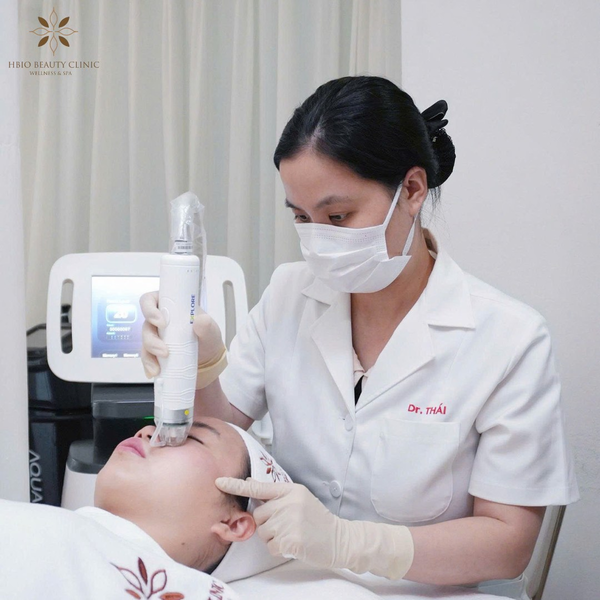
Clear sterilization procedures and recovery protocols.
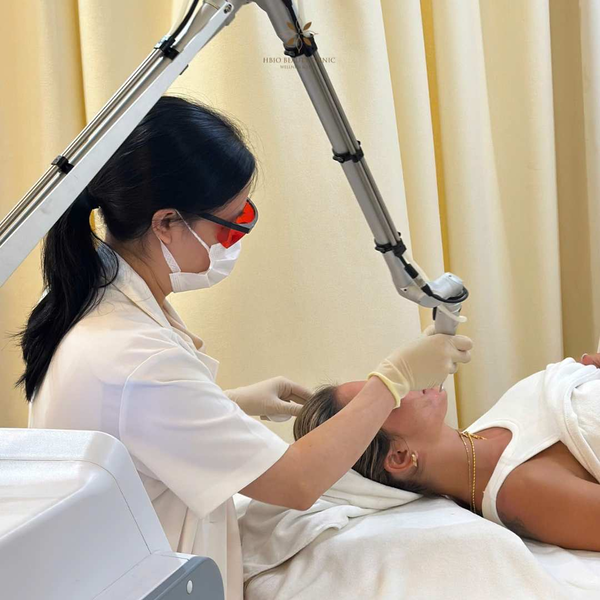
Ensuring absolute safety with a sterile environment approved by the Ministry of Health, along with a photobiological light therapy treatment to reduce swelling urgently after injection.
Distinguishing between mild swelling after injection and filler displacement
| Criteria | Normal physiological swelling | Filler injection for smile lines may spill over |
| Time of manifestation | It only appears during the first 3-5 days after injection and then gradually subsides. | If symptoms persist for 7-10 days without improvement, or even become more noticeable, it may persist. |
| The feeling when touched | The skin tissue is slightly and uniformly taut due to a temporary water retention response. | A hard, lumpy, mobile, separate mass can be felt under the skin. |
| The state when laughing | Fillers create a natural, expressive look, moving smoothly with facial muscles. | The filler was pushed up significantly on the upper cheek, resulting in a stiff, distorted smile. |
| Accompanying symptoms | There may be slight bruising at the needle site, which will disappear on its own after a few days. | There is a persistent dull ache, and the skin around the injection site shows signs of patchy discoloration. |
| Solution | Continue applying gentle cold compresses and monitor the condition at home. | Go to HBIO Clinic immediately so a doctor can administer an emergency dissolving injection. |
Skin care to restore and prevent filler leakage
During and after the treatment of filler spillage in smile lines, home care plays a crucial role:
- Gently clean the injection area with saline solution or a mild antiseptic solution.
- Avoid massaging, pressing hard, or lying on your side with pressure on the facial muscles to prevent further spread of the filler.
- Limit strenuous sports activities, and avoid saunas or hot baths for the first few days.
- Absolutely abstain from alcohol, tobacco, and stimulants as they slow down skin tissue recovery.
- Supplement your diet with foods rich in Vitamin C and Vitamin E (oranges, lemons, broccoli) and drink plenty of water to support skin regeneration.
Frequently Asked Questions Regarding Filler Injections for Smile Lines
- Can filler that has spilled into the nasolabial folds resolve on its own? No. Once the filler has shifted into the wrong muscle layer, it will remain fixed there and cannot move back to its original position. Medical intervention is necessary to address this.
- How long does it take for filler injections in nasolabial folds to stabilize? Typically, a properly administered injection will stabilize and become soft and natural after 7 to 14 days, depending on the individual’s body.
- Does filler that has spilled into the nasolabial folds need to be dissolved? Yes. Dissolving with the enzyme Hyaluronidase is the only and fastest way to break down the faulty filler, returning the skin tissue in the cheek and nose area to its normal state.
- How to distinguish between physiological swelling and true filler spillage? Physiological swelling will gradually subside after 3-5 days. If after 7 days the injection area is still bumpy, feels hard and lumpy, and moves when smiling, then it is a true filler spillage in the nasolabial folds.
- Why does smiling feel stiff after injection? Due to the practitioner injecting an excessive amount or injecting too shallowly, compressing the facial muscles around the mouth, the smile appears forced and stiff.
- Is filler spillage in smile lines dangerous? If it’s just normal muscle spillage, it mainly causes aesthetic issues. However, if the filler spillage is due to incorrect injection technique causing compression or blockage of blood vessels, it is extremely dangerous and can lead to skin necrosis if not treated promptly with dissolving injections.
Understanding how filler spillage in smile lines can affect your appearance and health will help you proactively protect your beauty and health. If you are experiencing filler shifting or clumping after injection, contact HBIO Clinic immediately for timely and safe treatment by a specialist.