Tiếng Việt
Allergic acne is a skin condition characterized by the appearance of tiny bumps, redness, or inflamed lesions, accompanied by sensations of itching, stinging, or burning. This condition often renders the skin more sensitive and prone to increased redness and spreading if managed incorrectly. Join Hbio Clinic in exploring the causes, signs, and management strategies to help your skin recover safely.
Overview of Allergic Acne
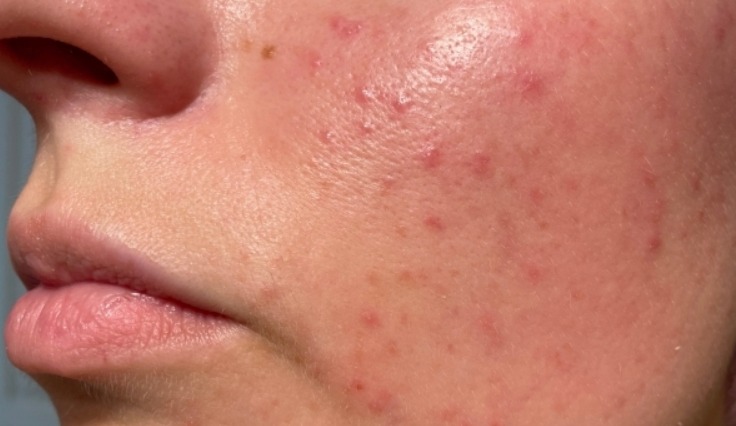
Allergic acne is a skin condition involving the appearance of small bumps, redness, or itchy inflammation resulting from the skin’s reaction to external or internal irritants.
Unlike common acne—which is primarily linked to excess oil, dead skin cells, and clogged pores—allergic acne typically arises when the skin reacts to cosmetics, foods, weather conditions, or environmental factors.
Allergic acne is also frequently accompanied by sensations of itching, stinging, and burning. The lesions usually appear on the face—particularly the cheeks, forehead, or chin—but can spread to the neck and body if the irritation is severe.
Signs of Allergic Acne
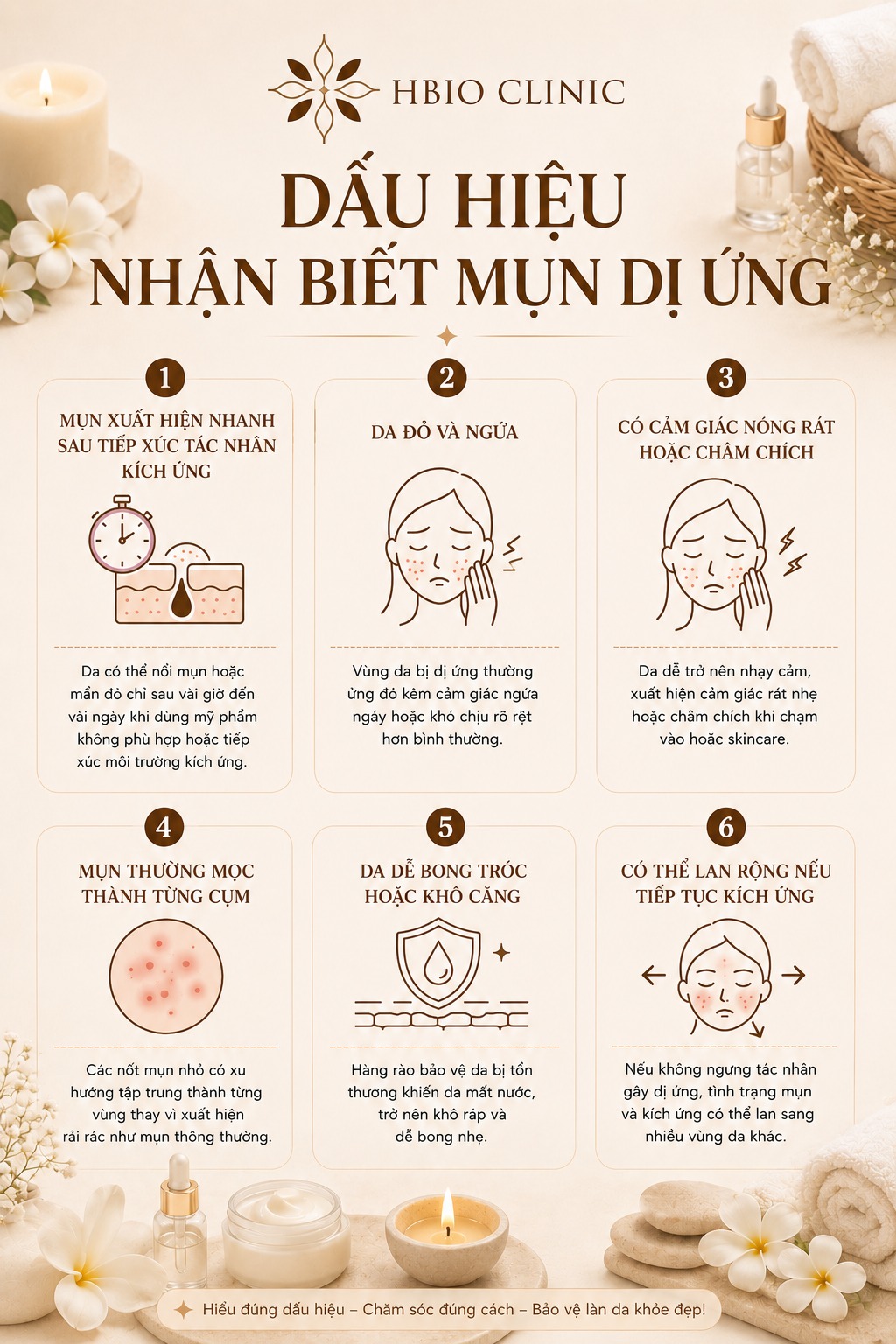
Allergic acne typically appears rapidly after the skin comes into contact with an irritant and is often accompanied by skin discomfort. Specific signs include:
- Rapid onset after exposure to an irritant: Pimples or redness may appear within just a few hours to a few days of using unsuitable cosmetics or being exposed to an irritating environment.
- Redness and itching: The affected skin area often turns red and feels noticeably itchier or more uncomfortable than usual.
- Burning or stinging sensation: The skin becomes sensitive, causing a mild burning or stinging sensation upon touch or during skincare routines.
- Clustered breakouts: Small pimples tend to group together in specific areas rather than appearing sporadically like ordinary acne.
- Peeling or tight, dry skin: Damage to the skin’s protective barrier leads to moisture loss, making the skin feel rough, dry, and prone to mild peeling.
- Potential to spread with continued irritation: If exposure to the allergen is not stopped, the acne and irritation may spread to other areas of the skin.
What causes allergic acne?
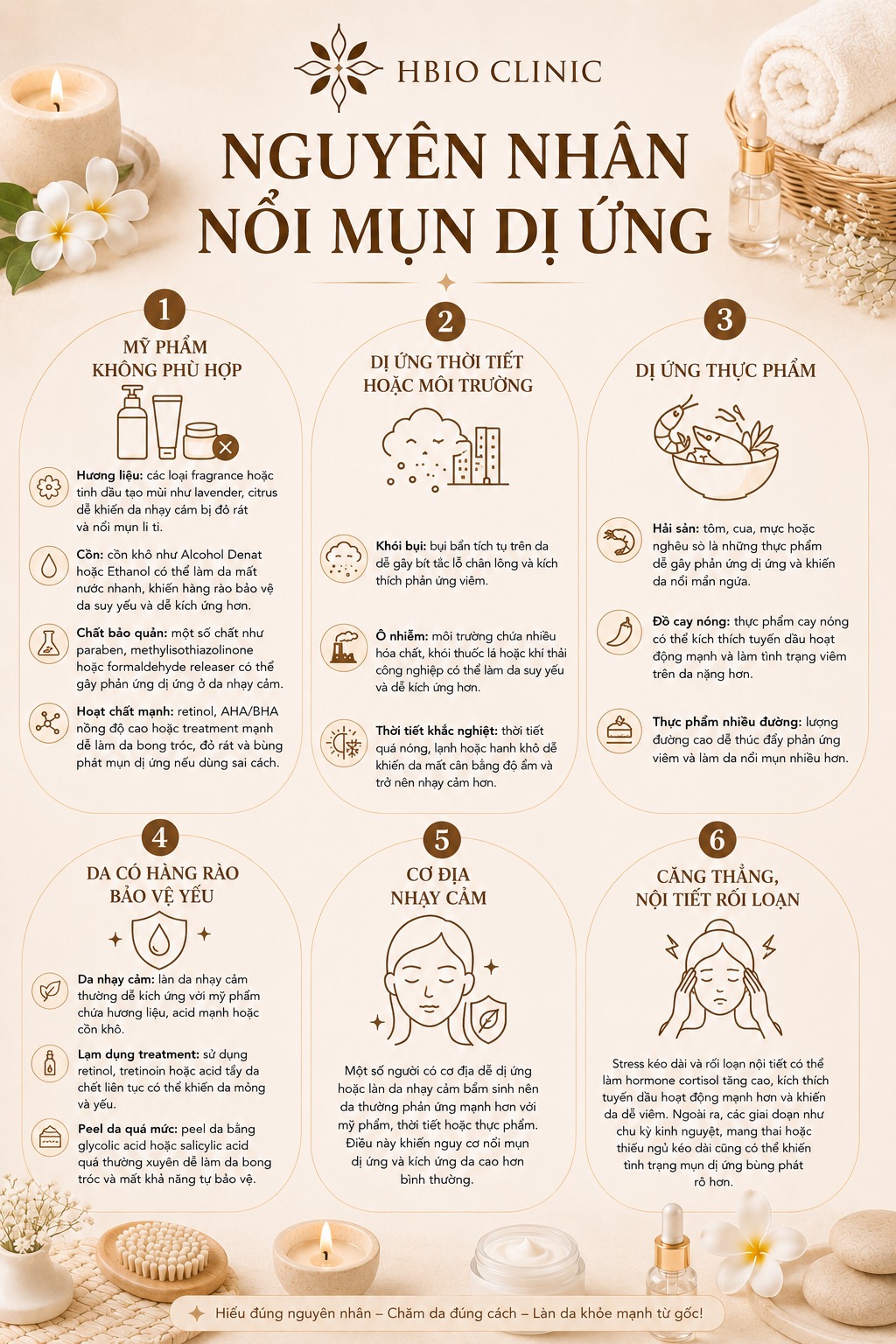
Allergic acne can occur when the skin reacts to irritants, including:
**Unsuitable cosmetics**
Certain ingredients in cosmetics—such as fragrances, alcohol, or preservatives—can cause irritation, redness, or allergic acne if they are incompatible with your skin type.
**Weather or environmental allergies**
Pollution, dust, and fluctuating weather conditions can make the skin more sensitive and prone to allergic acne breakouts.
**Food allergies**
Certain foods—such as seafood, spicy dishes, or high-sugar items—can trigger inflammatory responses or provoke allergic acne in sensitive individuals.
**Weakened skin barrier**
When the skin’s protective barrier is compromised due to excessive beauty treatments, the skin becomes more reactive to external factors, increasing the risk of allergic acne.
**Sensitive skin constitution**
Some individuals have a predisposition to allergies or naturally sensitive skin, causing them to react more strongly to cosmetics, weather changes, or foods. This elevates the risk of skin irritation and allergic acne.
**Stress and hormonal imbalances**
Prolonged stress and hormonal imbalances can raise cortisol levels, stimulating oil gland activity and making the skin prone to inflammation. Additionally, periods such as menstruation, pregnancy, or chronic sleep deprivation can exacerbate allergic acne flare-ups.
Effective Care and Treatment for Allergic Acne
Depending on the cause and severity of the irritation, allergic acne can be managed through appropriate care and treatment methods, such as:
- Discontinue use of the irritating product immediately: Eliminate the suspected culprit to minimize inflammation and redness.
- Adjust your diet: Limit foods that are common allergens, high in sugar, or spicy/hot while the skin is sensitive.
- Simplify your skincare routine: Prioritize gentle products and minimize unnecessary steps.
- Soothe and restore the skin barrier: Incorporate ingredients like Vitamin B5, Hyaluronic Acid (HA), and Ceramides to reduce dryness and irritation while strengthening the skin.
- Avoid harsh treatments: Temporarily pause the use of retinol, AHA/BHA, or other potentially irritating active ingredients while the skin is sensitive.
- Manage stress and hormonal balance: Get adequate sleep, practice relaxation, and maintain a balanced lifestyle to support skin health.
- Protect skin from external factors: Limit exposure to sunlight, dust, and pollution during the recovery period.
- Seek professional care: Consult a specialist to identify the cause and establish an appropriate treatment plan.
Safe Allergic Acne Treatment Process at HBIO
At HBIO Clinic, the allergic acne treatment process follows medically standardized steps, including:
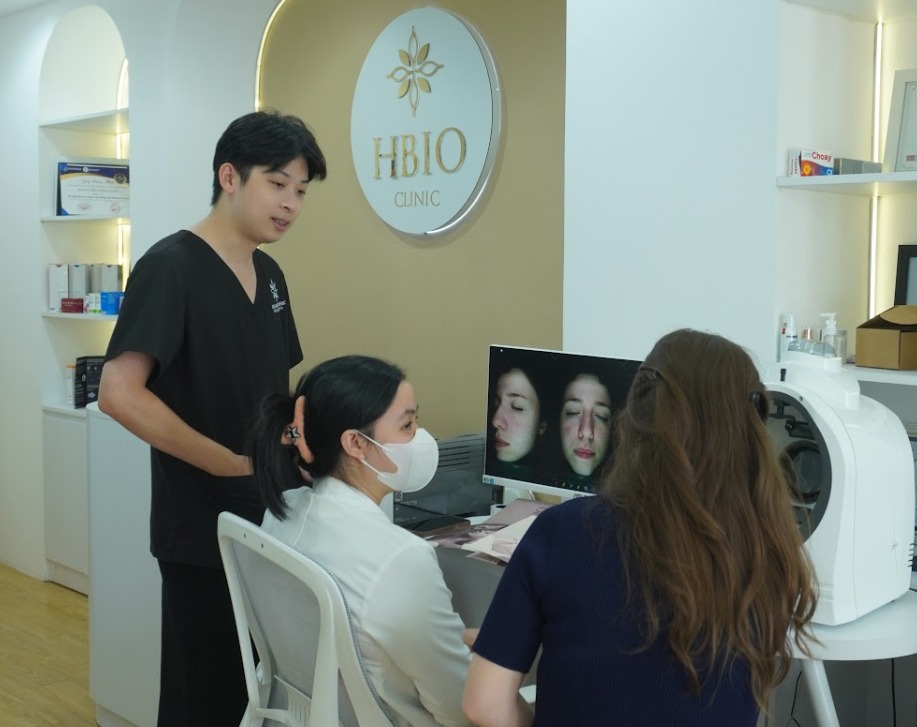
Step 1: Skin analysis and irritation assessment
A specialist performs a skin analysis to evaluate the level of inflammation, skin sensitivity, and the extent of any damage.
Step 2: Customized treatment plan design
Based on the severity of the irritation, skin type, and the cause of the allergy, a personalized care and recovery regimen is created for the client.
Step 3: Deep cleansing
The skin is gently cleansed to remove dirt, excess oil, and cosmetic residue from the surface. This includes makeup removal, gentle facial cleansing, mild exfoliation, and skin balancing.
Step 4: Steam treatment to soften the skin
Steam is applied at an appropriate temperature to help open pores and soften the skin’s surface.
Step 5: Excess oil removal and skin disinfection
Oily areas—such as the nose, chin, or T-zone—are cleansed using specialized equipment. Simultaneously, the skin is thoroughly disinfected to minimize the risk of bacterial growth on irritated areas.
Step 6: Medical-standard acne extraction
Acne lesions are treated using techniques tailored to the specific skin condition to minimize trauma and reduce the risk of post-treatment dark spots or scarring.
Step 7: Post-treatment soothing and disinfection
Following extraction, the skin is cleansed again and treated with an appropriate antiseptic solution to prevent inflammation.
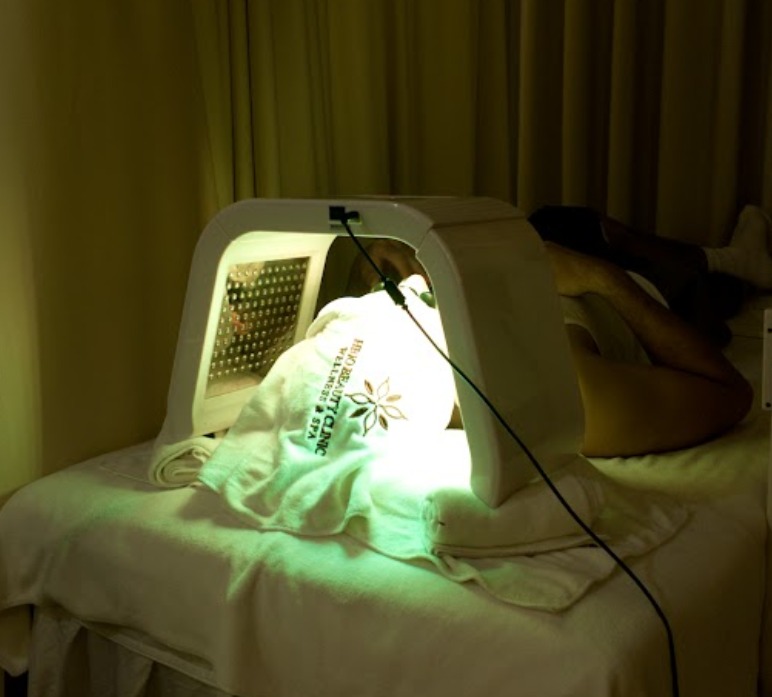
Step 8: Bio-light therapy
Bio-light therapy is used to help reduce inflammation, soothe irritated skin, and accelerate the skin’s recovery process.
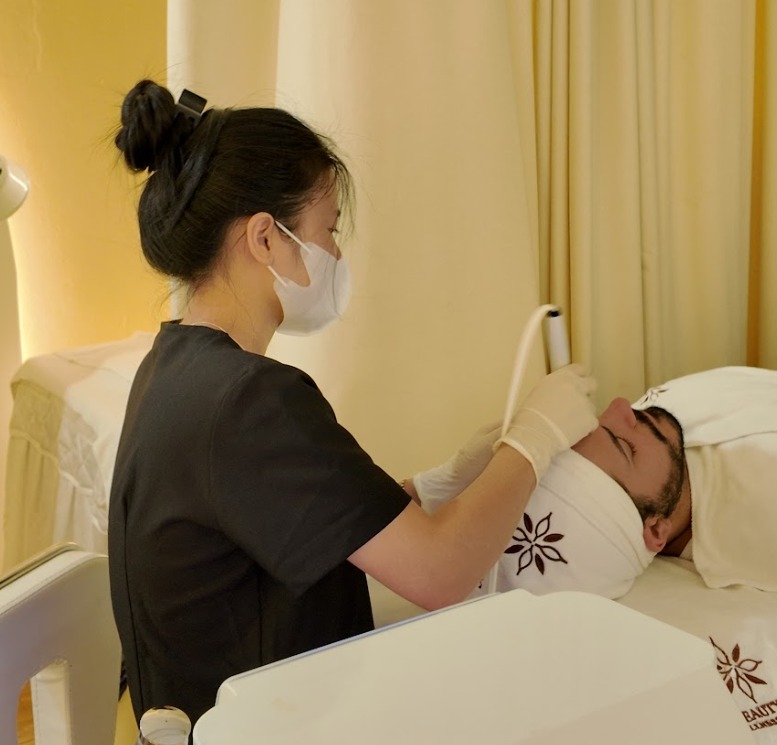
Step 9: Electrophoresis of restorative serum
Restorative serums containing active ingredients such as Vitamin B5, Hyaluronic Acid (HA), or peptides are infused into the skin using electrophoresis technology. This enhances absorption, helping to restore the skin’s protective barrier and alleviate post-treatment dryness and irritation.
Step 10: Apply protective dermocosmetic products
Suitable dermocosmetic products are applied to hydrate, soothe, and help protect the skin against external environmental stressors.
Step 11: Skincare instructions and follow-up visit
Skincare for acne caused by an allergic reaction
In addition to medical treatment, following proper skincare principles is an effective way to manage allergic acne:
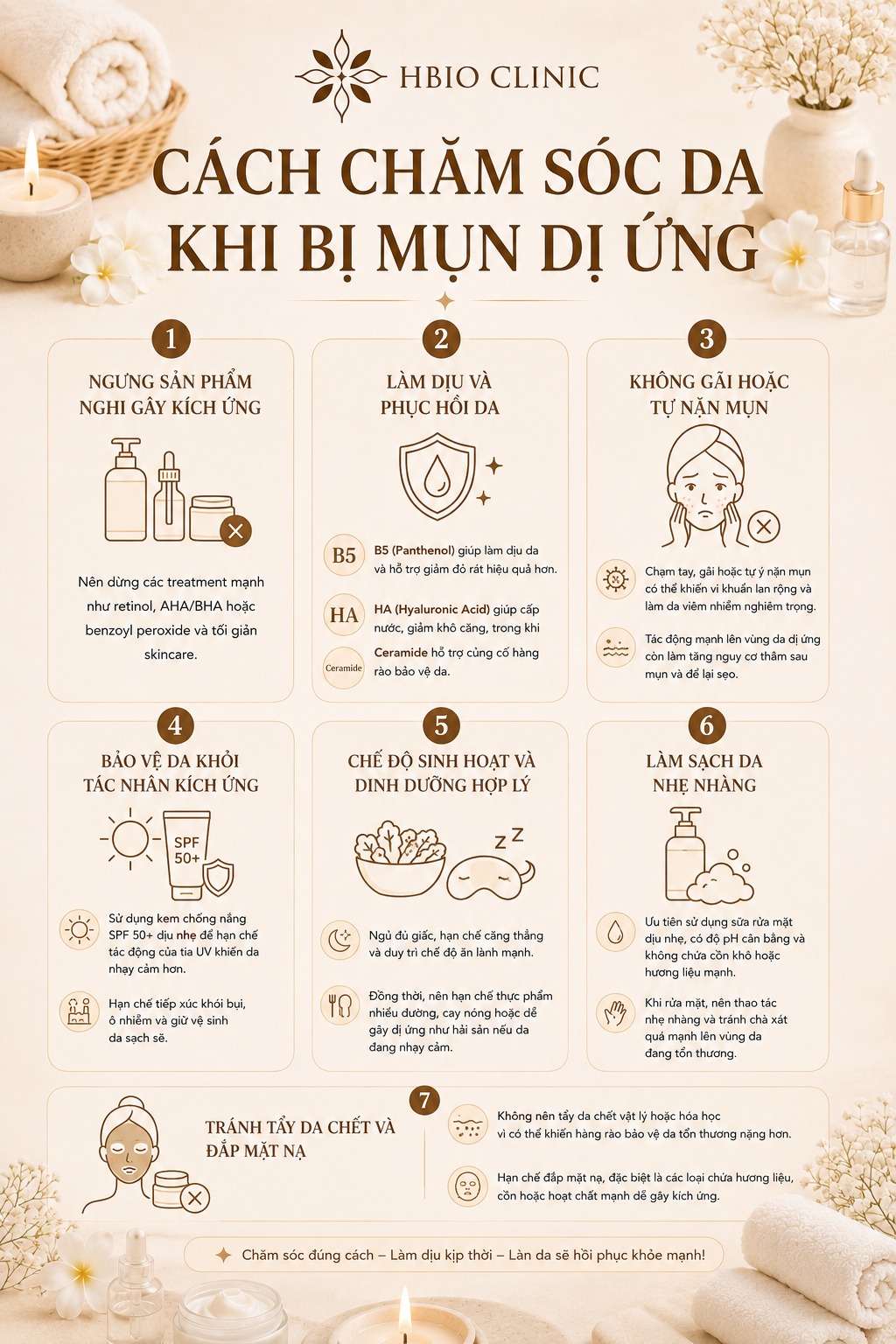
- Discontinue products suspected of causing irritation: Immediately stop using any products suspected of triggering irritation to prevent the inflammatory reaction from worsening. Also, pause the use of potent treatments—such as retinol, AHA/BHA, or benzoyl peroxide—and simplify your skincare routine.
- Soothe and repair the skin: Repairing active ingredients like B5 (Panthenol) help soothe the skin and effectively reduce redness and burning sensations. Hyaluronic Acid (HA) hydrates the skin and relieves tightness, while Ceramides help strengthen the skin’s protective barrier.
- Do not scratch or pick at acne: Touching, scratching, or manually squeezing pimples can spread bacteria and worsen inflammation. Furthermore, rough handling of the irritated area increases the risk of post-acne dark spots and scarring.
- Protect the skin from irritants: Use a gentle SPF 50+ sunscreen to minimize UV exposure, which can further sensitize the skin. Additionally, limit exposure to dust and pollution, and maintain good skin hygiene.
- Maintain a healthy lifestyle and diet: Get sufficient sleep, minimize stress, and follow a healthy diet to support internal skin recovery. Limit the intake of sugary, spicy, or highly allergenic foods (such as seafood) while your skin is sensitive. Cleanse gently: Opt for a mild, pH-balanced cleanser free from drying alcohols or harsh fragrances to avoid further irritation. Use gentle motions when washing and avoid scrubbing the affected areas vigorously.
- Avoid exfoliation and face masks: Do not use physical or chemical exfoliants while experiencing an acne-related allergic reaction, as this can further damage the skin’s protective barrier.
Questions Regarding the Treatment of Allergic Acne
Below are common questions from HBIO Clinic clients regarding the treatment of allergic acne, addressed by Dr. Thai.
Is allergic acne dangerous?
If the allergic reaction is mild and treated promptly, allergic acne is generally not dangerous and tends to improve within a short period.
Does allergic acne resolve on its own?
Allergic acne can improve on its own if the irritating agent is completely removed and proper skincare is maintained during the recovery phase.
When should you see a dermatologist?
You should consult a dermatologist if you experience persistent redness and burning, rapid spreading of acne, or signs of significant inflammation. Additionally, if severe peeling occurs, a professional skin analysis and appropriate treatment can help prevent further skin damage.
Allergic acne not only affects your appearance but can also compromise the skin barrier, making it more sensitive and vulnerable if managed incorrectly. Soothing the skin, minimizing irritation, and following a proper recovery plan will lead to steady improvement over time. If you experience persistent redness, burning, or widespread breakouts, consider visiting HBIO Clinic for a skin analysis and a consultation tailored to your specific condition.