Tiếng Việt
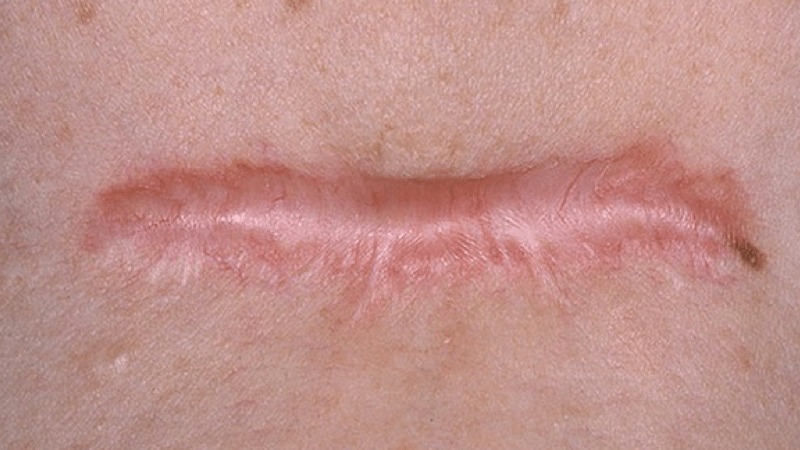
Keloids are the result of excessive collagen proliferation, causing the damaged skin area to become raised, expand, and persist over time. Beyond affecting one’s appearance, these scars can cause itching and discomfort, or lead to a loss of self-confidence in daily life. In this article, HBIO Clinic explains the causes and signs of keloids, as well as effective treatment methods to improve the condition.
Causes of keloid formation
Keloids form when the body’s wound-healing process becomes excessive, specifically involving uncontrolled collagen proliferation at the site of the injury.
Typically, following skin injury, the body triggers a self-healing mechanism by producing new cells and collagen to fill the wounded area.
However, in individuals predisposed to keloids, subcutaneous fibroblasts become abnormally active and continue to produce collagen even as the wound nears recovery. This excess collagen accumulates densely beneath the skin, causing the scar tissue to continue growing and spreading outward.
Signs of keloid scars
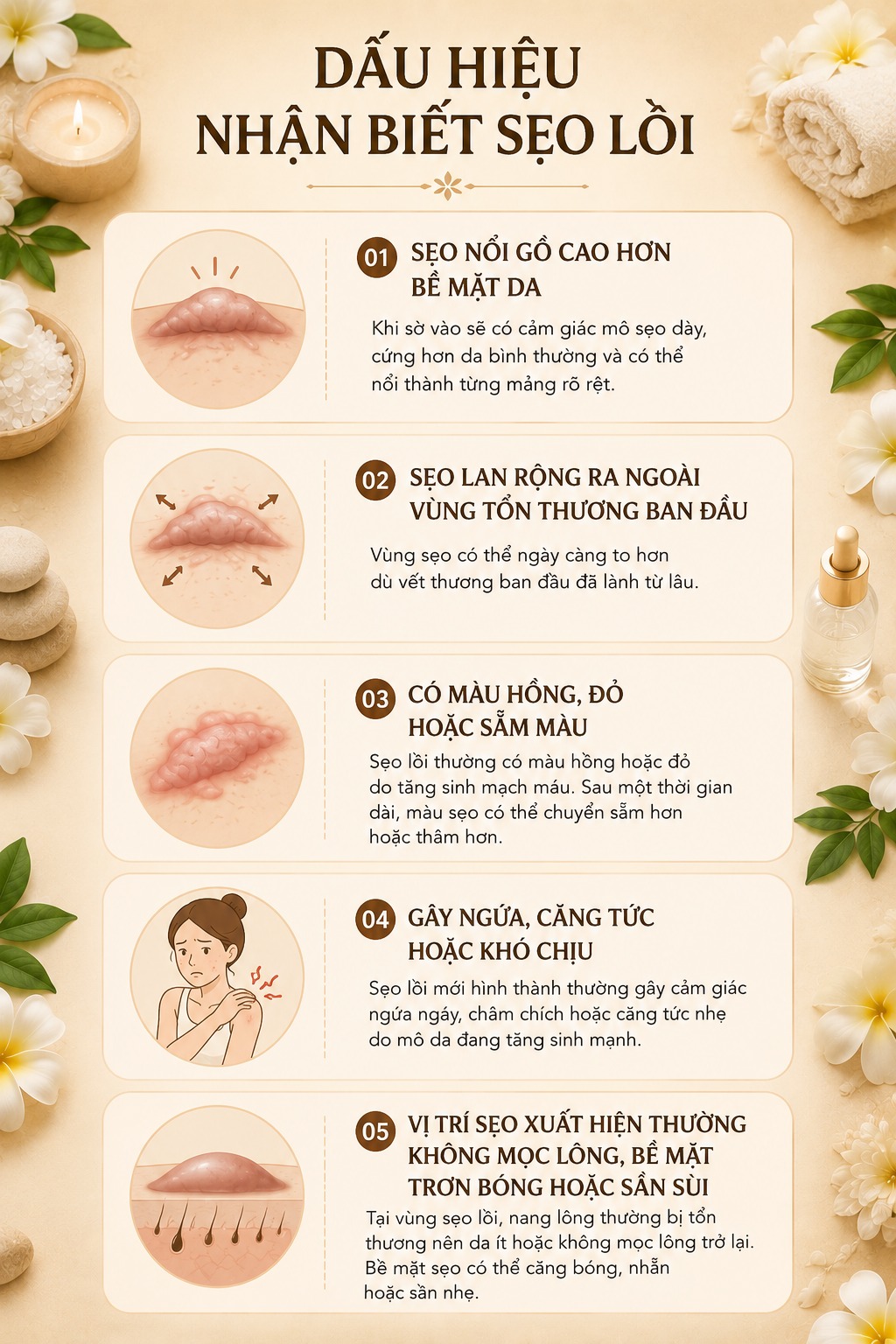
Keloid scars often exhibit distinctive characteristics regarding shape, color, and tactile sensation, making them relatively easy to identify:
- Raised above the skin surface: Keloids typically protrude significantly above the surrounding skin due to excessive collagen proliferation beneath the surface. To the touch, the scar tissue feels thicker and harder than normal skin and may form distinct, raised patches.
- Extension beyond the original injury site: Keloids tend to grow beyond the boundaries of the original wound over time. The scar area may continue to enlarge long after the initial wound has healed.
- Pink, red, or dark coloration: In the early stages of formation, keloids often appear pink or red due to increased blood vessel proliferation in the damaged area. Over time, the color may darken or become hyperpigmented compared to the surrounding skin.
- Itching, tightness, or discomfort: Newly formed keloids often cause itching, stinging, or a sensation of tightness due to rapid tissue proliferation. While discomfort may subside as the scar matures, pain or aching can persist in some cases—particularly with large scars or during sudden weather changes.
- Absence of hair growth and a smooth or irregular surface: Hair follicles in the keloid area are often damaged, resulting in little to no hair regrowth. The scar surface may appear shiny and smooth or slightly irregular, depending on the extent of tissue proliferation and the age of the scar.
Causes of keloid formation
Keloids often appear following skin injuries—such as trauma, lacerations, cuts, or burns—or dermatological conditions like acne or skin infections. However, not every wound develops into a keloid, as the process depends on an individual’s unique physiology, wound care practices, and healing response.
- Predisposition to scarring: Some individuals have a physiological tendency for excessive collagen production, making their skin more prone to scarring after injury. As the wound heals, the body produces an overabundance of collagen, causing the scar tissue to become thick, raised, and larger than the original wound area.
- Habits affecting the scar: Habits such as picking at scabs, scratching, allowing prolonged inflammation, or using inappropriate medications can increase the risk of keloid formation. Additionally, failing to keep the injured area clean or exposing the skin to frequent sunlight can disrupt the normal healing process.
- Prolonged inflammation or infection: When a wound remains inflamed or infected for an extended period, the body continuously triggers tissue repair and produces collagen at an accelerated rate. This often leads to excessive scar tissue growth, resulting in a thicker and more expansive scar during the healing process.
- Frequent tension or stretching on the injured area: Areas of the skin subject to frequent movement or tension—such as the chest, shoulders, back, chin, or regions around joints—are more prone to scarring. Continuous stretching during recovery can stimulate aggressive scar tissue growth and hinder the scar’s natural stabilization.

Effective and safe ways to treat keloid scars
There are currently various methods available to help improve the appearance of keloid scars, depending on factors such as size, thickness, duration, and individual physiology. Depending on the condition of the scar, you may wish to consider the following treatments for long-standing keloids:
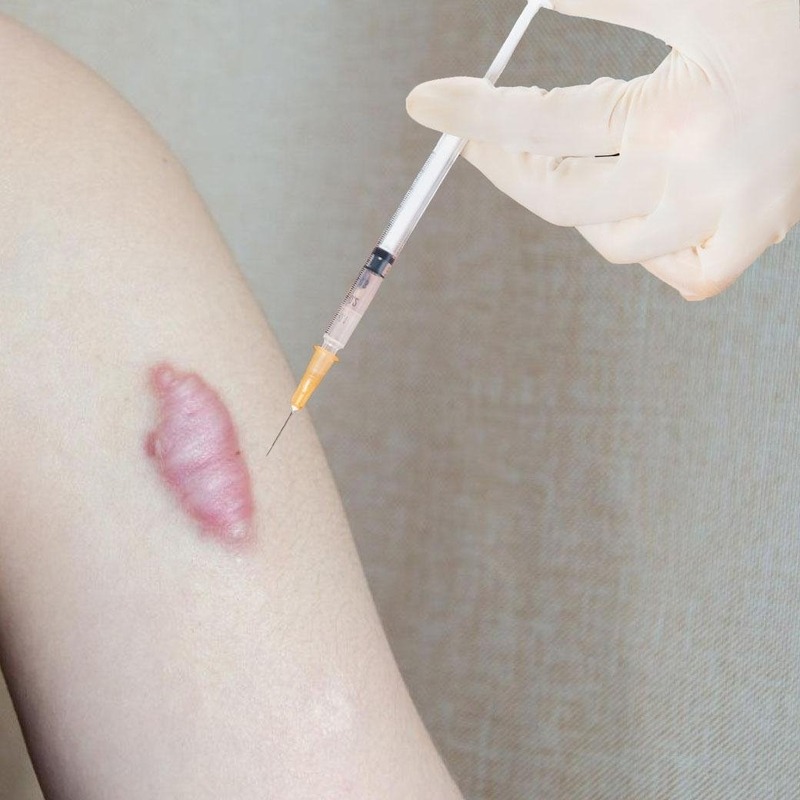
Corticosteroid injections for keloids
Corticosteroid injection involves administering medication directly into the scar tissue to inhibit collagen overproduction, causing the scar to soften and flatten over time. After multiple sessions, the scar typically becomes less raised and red, with a reduction in itching or tightness.
This method is generally suitable for small-to-medium-sized scars, as well as those that are newly formed or not yet excessively thick and rigid. Depending on the condition of the scar, a course of 3–6 sessions may be required, spaced several weeks apart.
Cost: Corticosteroid scar injections typically range from 500,000 to 2,000,000 VND per session, depending on the size and severity of the scar.
Laser treatment for keloids
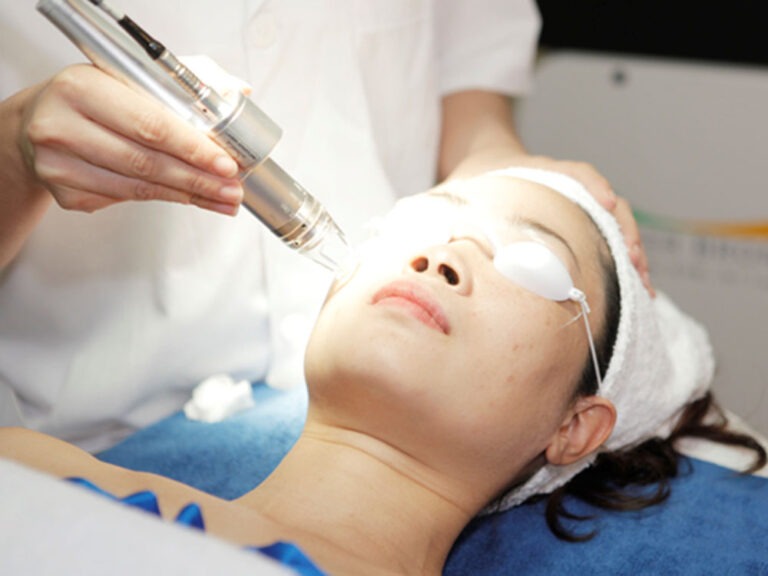
At HBIO Clinic, laser treatment for facial keloids is a modern method favored by many clients due to its ability to penetrate deep into scar tissue while being less invasive than surgery.
The laser works by delivering light energy directly to the scar tissue, breaking down abnormally proliferated collagen structures and stimulating the regeneration of healthier, more stable skin tissue. Additionally, the treatment helps soften scar tissue, reduce redness, decrease thickness, and promote a more even skin tone over time.
Cost: Laser scar treatment typically ranges from 1,500,000 to 5,000,000 VND per session, depending on the specific laser technology used and the size of the area being treated. A course of 3 to 8 sessions is usually required, depending on the severity of the keloid and the individual’s healing response.
Cryotherapy for keloids
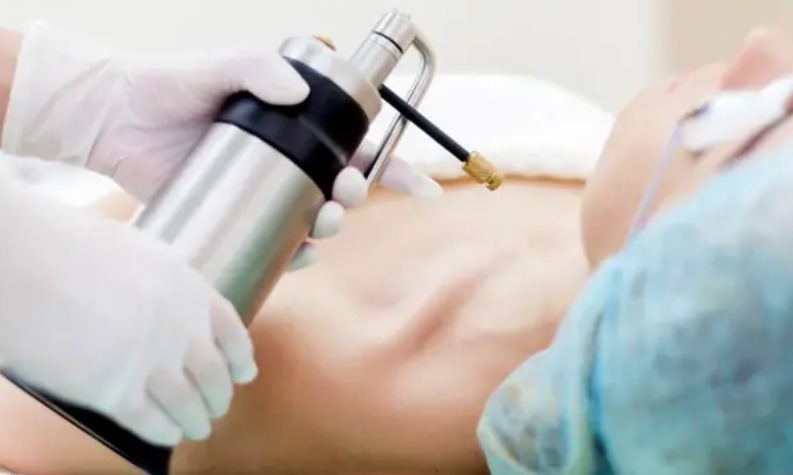
Cryotherapy is a procedure that uses liquid nitrogen at low temperatures to freeze and destroy scar tissue. When scar cells are damaged by extreme cold, the scar tissue gradually shrinks and flattens over time.
The advantages of this method include a quick treatment time and relatively effective size reduction for small scars. However, cryotherapy can cause temporary pain or a burning sensation, carries a risk of skin pigmentation changes, and may require multiple sessions to achieve noticeable improvement.
Cost: typically ranges from 500,000 to 2,500,000 VND per session, depending on the size of the scar.
Keloid excision surgery
Surgical scar excision is typically indicated for keloids that are excessively large, thick, and rigid, or that significantly impair mobility and aesthetics. The surgeon removes the scar tissue and treats the affected area to improve the scar’s appearance.
However, there remains a risk of recurrence following surgery if proper care and control of collagen proliferation are not maintained. Consequently, adjunctive treatments—such as laser therapy, corticosteroid injections, or radiation—are often required after excision to prevent the scar from regrowing.
Cost: typically ranges from 5,000,000 to 20,000,000 VND, depending on the scar’s size, location, and complexity.
Care tips to help minimize the development of keloid scars
Proper care during the early stages can help control collagen proliferation, limit scar enlargement, and support stable skin recovery over time.
- Keep the affected area clean daily to minimize bacteria, reduce inflammation, and support stable tissue recovery.
- Avoid scratching, picking at scabs, or vigorously rubbing the scar, as this can stimulate excessive collagen production.
- Avoid wearing overly tight clothing or subjecting the scar to constant friction, which can cause prolonged tissue irritation.
- Protect the area thoroughly and use appropriate sunscreen to prevent the scar from darkening or becoming further irritated by UV rays.
- Avoid self-medicating with topical corticosteroids or using products of unknown origin on keloid scars.
- Limit the consumption of foods known to cause irritation or inflammation if the scar remains red and sensitive.
- Early treatment—as soon as the scar begins to become raised—helps control its size and prevents it from spreading further.
- Attend regular follow-up appointments as directed by your doctor to monitor changes in the scar and adjust the treatment plan accordingly.

Frequently Asked Questions about keloids
Below are some common questions from HBIO Clinic clients regarding keloid scar treatment.
Can keloid scars be completely cured?
Keloid scars can show significant improvement in terms of elevation, color, and size with the right treatment methods applied at the appropriate stage. However, for large scars or in individuals prone to excessive collagen production, the treatment goal is usually to control the scar and make it flatter and softer, as complete eradication (100% removal) is difficult to achieve.
Is keloid scar treatment painful?
Most current treatment methods cause only a stinging or burning sensation, or mild discomfort, during the procedure. For treatments such as laser therapy or injections, doctors typically apply a topical anesthetic to ensure greater comfort for the client.
When should keloid scars be treated?
Keloid scars should be treated as soon as possible—ideally at the first sign of raised growth or abnormal spreading. Newly formed scars are generally softer and respond better to treatment than long-standing ones.
Can keloid scars recur?
There is a possibility of recurrence, as keloids are closely linked to an individual’s physiology and the body’s collagen production process. However, by following the correct treatment protocol and maintaining proper post-treatment care, the risk of recurrence can be effectively managed and significantly reduced.
Keloid treatment requires the right methods and early intervention to prevent the scar from spreading or recurring persistently. In addition to selecting the appropriate technology, proper care and close monitoring throughout the treatment process play a crucial role in achieving the best results.
With a team of experienced specialists and advanced treatment technologies, HBIO Clinic is committed to providing safe and highly effective treatment solutions tailored to each client’s needs. If your skin is at risk of scarring, please contact us for an early examination and treatment to ensure the aesthetic appearance of your skin.